


The choreography around the latest US—China summit carried the familiar rituals of great-power diplomacy: measured smiles, carefully balanced communiqués, and solemn promises to ‘manage competition responsibly’. Yet beyond the diplomatic theatre, the Indo-Pacific is drifting into something far more dangerous—a structural collision over Taiwan that neither Washington nor Beijing appears capable of defusing.
Taiwan has ceased to be merely a flashpoint. It has become the hinge upon which the future strategic order of Asia—and perhaps the credibility of the post-1945 international system itself—now turns.
For decades, policymakers comforted themselves with the illusion that ambiguity could indefinitely preserve peace across the Taiwan Strait. That assumption is collapsing under the weight of military acceleration, technological fragmentation, and intensifying nationalist politics on both sides of the Pacific. The summit may have temporarily reduced the temperature, but the strategic trajectory remains unmistakable: deterrence is hardening, alliances are thickening, and the space for compromise is narrowing.
The stakes now extend far beyond Taipei. A Chinese move against Taiwan would not simply alter control of an island of 23 million people. It would rupture the geopolitical architecture that has underpinned Indo-Pacific stability for generations. Taiwan sits at the centre of the First Island Chain, linking Japan to the Philippines like a maritime lock across China’s eastern flank. General Douglas MacArthur once called Taiwan an ‘unsinkable aircraft carrier’. More than seventy years later, the phrase feels less like Cold War rhetoric and more like strategic prophecy.
Should Beijing absorb Taiwan—through invasion, blockade, or political coercion—the People’s Liberation Army Navy would gain far greater access into the Pacific. The chokepoints of the Miyako Strait and Bashi Channel would no longer constrain Chinese maritime power in the same way. American planners understand this acutely. So do Japanese strategists, many of whom increasingly describe a ‘Taiwan contingency’ as inseparable from Japan’s own survival.
The anxiety is no longer theoretical. China’s military modernisation has accelerated at astonishing speed. According to Pentagon assessments, the PLA Rocket Force now fields thousands of ballistic and cruise missiles capable of striking US bases and carrier groups across the western Pacific. Hypersonic systems such as the DF-27 are reshaping assumptions about reaction time and survivability, while Chinese satellite surveillance increasingly erodes the operational invisibility once enjoyed by American naval forces.
This transformation explains why Washington’s strategy has quietly shifted from dominance to denial.
The old architecture of massive fixed bases and concentrated carrier power is giving way to dispersed deterrence: mobile missile batteries in the Philippines, expanded defence access agreements across Luzon, autonomous drone swarms, hardened logistics hubs, and Taiwan’s own ‘porcupine strategy’ of asymmetric defence. The objective is brutally simple: convince Beijing that any assault on Taiwan would become a protracted, economically catastrophic nightmare.
Yet deterrence alone cannot resolve the deeper crisis now emerging. At its core, Taiwan has become the collision point between two irreconcilable historical narratives. For Beijing, reunification has evolved into a test of national rejuvenation and Communist Party legitimacy. For Washington and its allies, Taiwan increasingly symbolises whether authoritarian coercion can redraw borders in the 21 century. That ideological dimension matters profoundly. A successful forced annexation would reverberate far beyond Asia, sending a devastating signal to smaller states everywhere that military power—not international law—ultimately determines sovereignty.
This is precisely why allied credibility has become as important as geography. A failure to defend Taiwan would echo across Tokyo, Seoul, Manila, Canberra, and even NATO capitals already unsettled by global instability. The fear in allied capitals is not merely Chinese expansionism. It is strategic abandonment. Analysts at the Heritage Foundation and Brookings have repeatedly warned that if Washington appeared unwilling to defend Taiwan, regional allies could begin to reconsider their own nuclear options or to accommodate Beijing more directly.
That possibility is no longer confined to academic debate. Japan has already announced its largest military buildup since the Second World War, doubling defence expenditure towards 2 per cent of GDP and acquiring long-range counterstrike capabilities. Australia’s AUKUS partnership reflects a similar recognition that the strategic environment has fundamentally changed. South Korea, while publicly cautious, continues edging closer to trilateral defence coordination with Washington and Tokyo despite immense domestic sensitivities.
Across Southeast Asia, meanwhile, governments are attempting an increasingly fragile balancing act—economically intertwined with China while quietly relying on American power to preserve strategic equilibrium.
The tragedy is that the economic foundations of globalisation are now being weaponised simultaneously by both camps.
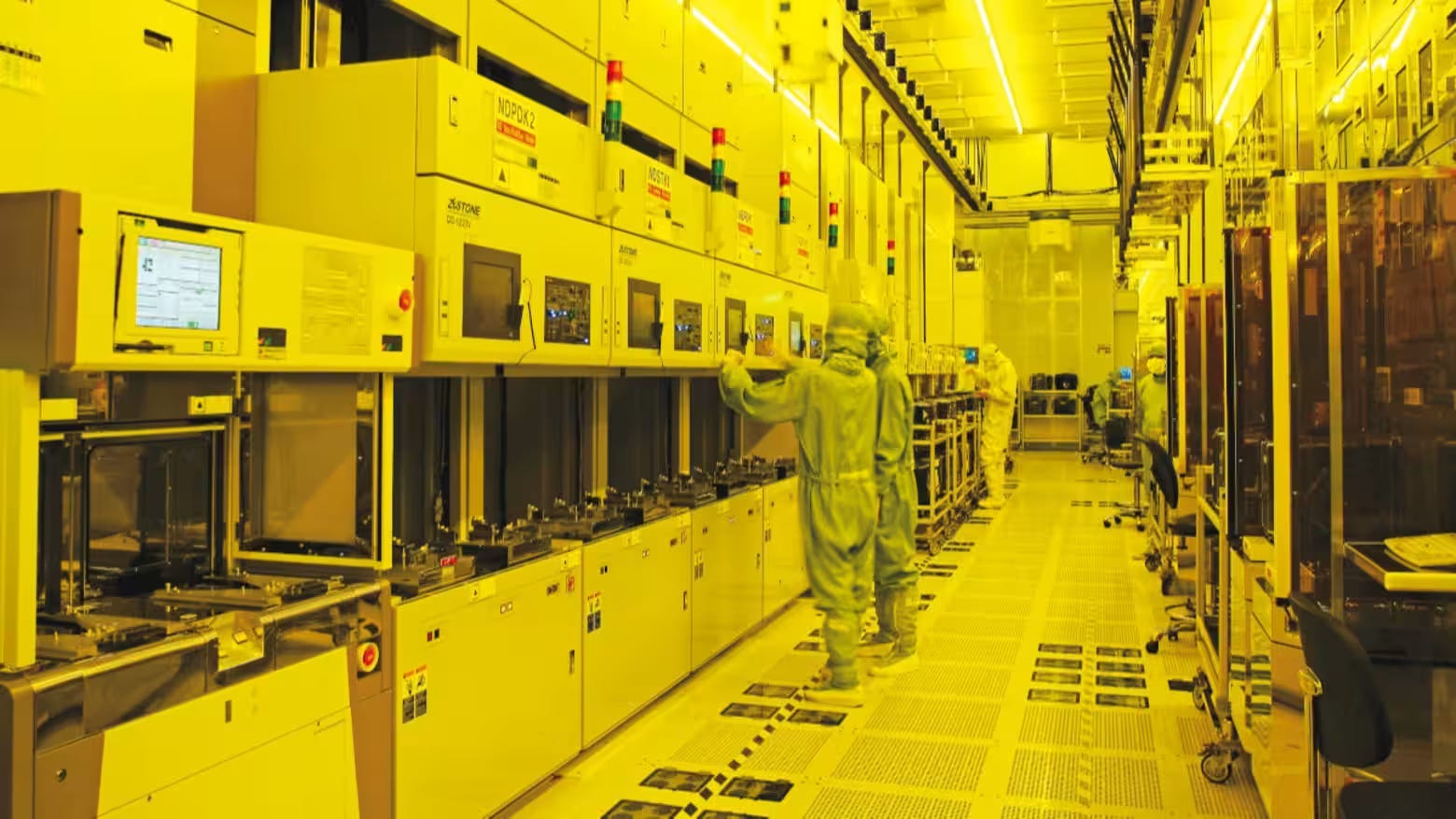
Taiwan’s semiconductor dominance once acted as a stabilising force—the so-called “Silicon Shield.” Taiwan Semiconductor Manufacturing Company produces roughly 90 per cent of the world’s most advanced chips, powering everything from artificial intelligence systems to advanced weapons platforms. The assumption was straightforward: no rational actor would risk destroying the technological heart of the global economy.
That logic is eroding. The United States, through the CHIPS Act and industrial reshoring efforts, is attempting to reduce dependence on Taiwanese production. TSMC’s expansion into Arizona symbolises this strategic diversification. Yet there is an uncomfortable paradox here. As Taiwan becomes less economically indispensable, the deterrent effect of mutual dependence may weaken. Some Taiwanese analysts already fear that reducing semiconductor dependence could subtly reduce America’s willingness to bear military risks on Taiwan’s behalf.
Even so, the notion that Taiwan’s importance begins and ends with semiconductors profoundly misunderstands the crisis. Chips are the accelerant, not the foundation. Geography remains the enduring reality.
The darker possibility is that the world is sleepwalking into a prolonged era of calibrated coercion rather than outright war or peace. China may not need an amphibious invasion to fundamentally alter Taiwan’s status. A blockade, cyber paralysis, disinformation campaigns, political infiltration, or economic strangulation could gradually neutralise Taiwanese autonomy while avoiding the dramatic imagery of tanks landing on beaches.
Such a scenario would test Western resolve in even more dangerous ways because ambiguity thrives below the threshold of open conflict.
The economic consequences alone would be staggering. Chatham House estimates that a major Taiwan crisis could erase up to 5 per cent of global GDP—surpassing the damage of the global financial crisis or the pandemic shock. Shipping lanes through the Taiwan Strait carry nearly half the world’s container fleet. Disruption would detonate supply chains from Europe to Africa. Insurance premiums would soar. Energy prices would spike. Financial markets would convulse.
And hanging silently behind all of this is the nuclear shadow. China’s expanding nuclear arsenal, combined with increasingly sophisticated ballistic missile submarines operating from protected bastions in the South China Sea, has introduced new instability into deterrence calculations. The danger is no longer simply invasion. It is escalation through miscalculation—a crisis spiralling faster than diplomacy can contain.
The real lesson from the latest US—China summit is not reassurance. It is recognition that both powers now understand the magnitude of what is approaching, yet neither possesses a politically viable off-ramp.
Taiwan is no longer merely a regional dispute awaiting management through strategic ambiguity. It has become the defining stress test of whether coexistence between a rising China and an entrenched American-led order remains possible.
If the 20 century was shaped by the battle over Europe, the 21 century may well be determined by whether catastrophe can be avoided in the waters surrounding Taiwan. And increasingly, the world no longer looks prepared for that answer.
