


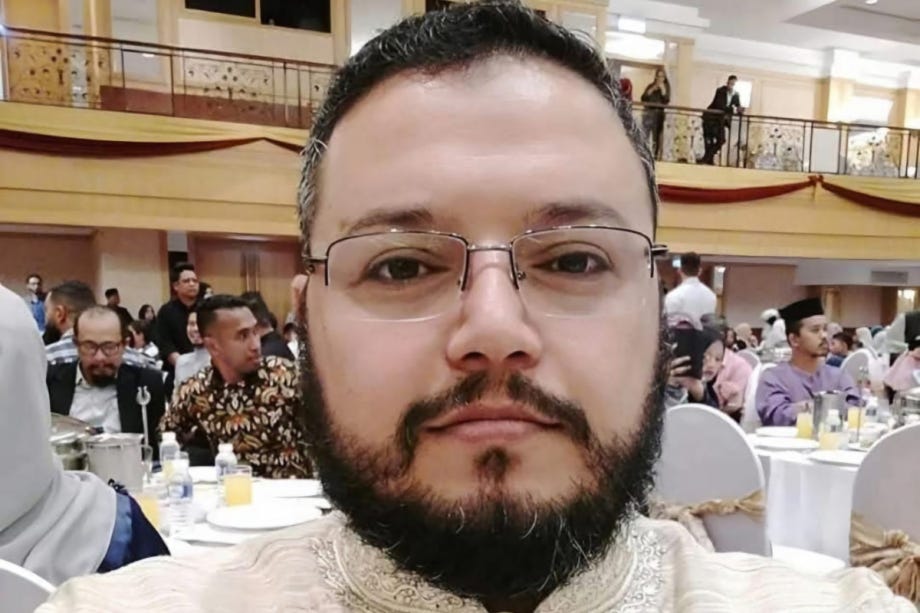
On 16 July 2026, Indonesia’s elite counter-terrorism unit Densus 88 arrested a 41-year-old Palestinian scholar, Sheikh Abdul Karim Raed Miqdad, in a Bekasi hotel. Within twenty-four hours—not days, not weeks, but a single rotation of the earth—he was deported to Cyprus.
This was not a sovereign deliberation. This was an instinct. And instincts, as every strategist knows, reveal more about a state’s true character than any carefully crafted diplomatic communiqué.
Indonesia’s 1945 Constitution opens with words that once thundered across the colonised world: “Independence is the right of all nations, and therefore, colonialism must be abolished in this world because it is not in conformity with humanity and justice.” This was not poetry. This was the foundational covenant of a nation born from the crucible of anti-colonial revolution—a nation whose founders were themselves branded terrorists by the Dutch.
History records that Palestine recognised Indonesian sovereignty before Indonesia even declared independence. In September 1944—a full eleven months before the Proclamation—the Grand Mufti of Palestine, Sheikh Muhammad Amin al-Husseini, broadcast recognition of Indonesia’s independence through Berlin Radio.
Muhammad Ali Taher, a wealthy Palestinian merchant, deposited his personal savings in the Arab Bank to fund Indonesian diplomats fighting for international recognition. This was not charity. This was solidarity between the colonised—a recognition that the struggle against empire was indivisible.
An Interpol Red Notice is not an arrest warrant. Indonesia’s own National Police have admitted as much: “Red notice Interpol tidak bersifat wajib bagi negara untuk melakukan upaya paksa“—it is not binding for any country to take coercive action. The obligation is merely to report the subject’s presence. Yet Indonesia chose speed over scrutiny, compliance over conscience.
Why the haste? Communications between Cypriot and Indonesian police had been ongoing since 21 May 2026. The Red Notice was issued on 10 June. There was no operational urgency. There was only institutional over-compliance—the bureaucratic reflex of a state so deeply integrated into global security architectures that it has forgotten how to say “wait.”
Indonesian authorities insist Miqdad is not an activist or preacher but a “businessman” and “terrorism perpetrator.” The Palestinian Scholars Association has expressed “grave concern” about his deportation, warning that handing him to Israel would violate international law. The Geneva Council for Rights and Liberties notes that documents it reviewed “did not specify the acts attributed to Miqdad, nor did they include supporting evidence or a clear description of the allegations.”
The terrorism label, as the original analysis observes, is “a piece of rubber”—a floating signifier that expands and contracts according to the political needs of the labeller. The British called the Mau Mau terrorists. The French called the FLN terrorists. The Dutch called Indonesia’s founding fathers terrorists. Nelson Mandela remained on the U.S. terrorism watch list until 2008—fifteen years after he won the Nobel Peace Prize.
When a Palestinian scholar of fiqh who advocates for freedom from occupation is labelled a terrorist, the label does not describe his actions. It delegitimises his political existence in advance. It forecloses the possibility that his struggle might be understood as resistance, his scholarship as intellectual production, his advocacy as political speech. In the 1950s, Indonesia sheltered Lhadj Brahimi, a young Algerian freedom fighter who would later become his country’s foreign minister and a distinguished UN diplomat. He was a “terrorist” in French eyes. Indonesia gave him sanctuary.
Here is the question that cannot be answered with bureaucratic platitudes: Why was a Palestinian scholar deported within twenty-four hours while former IDF soldiers operate businesses openly in Bali—running villas, restaurants, and culinary enterprises?
The answer is structural. The Israeli citizen enters Indonesia’s sovereign space already coded as a legitimate global subject—a bearer of rights, a participant in commerce. The Palestinian activist enters coded as a potential security threat, a body that must be vetted against databases, subjected to the preemptive suspicion that the global counter-terrorism apparatus has trained upon Muslim populations in general and Palestinian activists in particular.
This is not conspiracy. This is the political economy of the double standard. Tourism is a pillar of the Indonesian economy; Bali is its crown jewel. The Palestinian scholar generates no economic rent. The IDF veteran is a node in the tourism economy. The market rewards one and punishes the other, and the state, having internalised market rationality as its operational code, follows suit.
Cyprus is not a random node in the Mediterranean. It is a site of dense military and intelligence cooperation with Israel—joint air force exercises, intelligence sharing, the use of Cypriot territory as a geoclimatic proxy for Middle Eastern operational environments. The Israeli military trains in Cyprus precisely because the topography simulates Lebanon, Syria, and Palestine.
When Miqdad was arrested in Cyprus during the Global Summit to the Flotilla, that arrest occurred within a specific juridico-political ecology where the Israeli security apparatus exercises significant influence over the threat-perception frameworks of allied states. The Red Notice that reached Indonesia was birthed in this same ecology—a transnationally circulated accusation whose origins lie in a conflict to which Indonesia is not a party, whose labelling logic reflects the political imperatives of a foreign power.
Yusril Ihza Mahendra, Indonesia’s Coordinating Minister for Law, Human Rights, Immigration, and Corrections, insists Cyprus will not extradite Miqdad to Israel. But the very need for such assurances reveals the fear. The Palestinian Scholars Association has demanded guarantees against extradition.
The Geneva Council has warned that transfer to Israel would violate the principle of non-refoulement. When Indonesia deported Miqdad without due process, it outsourced his fate to a state whose relationship with Israel is one of deepening military partnership.
This is not merely a policy inconsistency. This is a metaphysical betrayal—a rupture in the very fabric of the state’s self-constitution. The arrest of a Palestinian scholar under a terrorism label applied by an occupying power represents a moment where the state acts against the philosophical grammar that makes it legible as the entity proclaimed on 17 August 1945.
The opening of Indonesia’s constitution is not decorative rhetoric. It is performative. It constitutes the Indonesian state as a subject bound by a specific moral identity—an identity forged in the experience of colonial subjugation and committed to the universal liberation of colonised peoples.
When the state arrests a scholar from a colonised people under a terrorism accusation formulated by the colonising power, it is not simply making a policy error. It is breaking the covenant.
Indonesia’s founders wrote one rhyme in 1945. The deportation of Sheikh Abdul Karim Raed Miqdad has written another. Whether the two can coexist in the same poem is the question that this moment demands the Indonesian people, the conscience of the region, and the global community of strategists and policymakers to answer.
The answer, so far, is not encouraging.
