


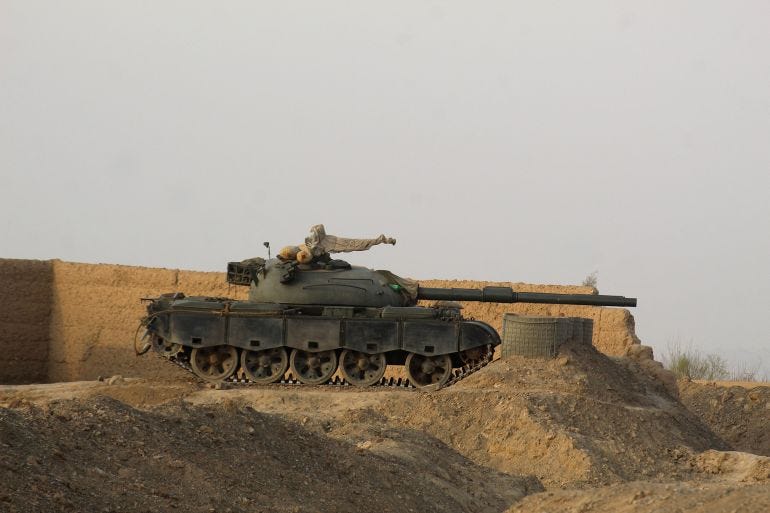
War along the Durand Line has erupted with a tragic familiarity. Air strikes over Kabul and Kandahar, artillery duels across the 2,600-kilometre frontier, and the chilling declaration from Islamabad that ‘our patience has overflowed’ and that it is now ‘open war’ with Afghanistan have jolted a region already exhausted by four decades of conflict. The Guardian reports that Pakistani jets and artillery struck multiple Afghan provinces on 27 February, with Afghan forces retaliating against border posts and both sides claiming heavy casualties.
Civilians—including wounded children treated in Khyber Pakhtunkhwa hospitals—are once again paying the price. The United Nations has urged restraint, warning that nearly 22 million Afghans, half the population, already depend on humanitarian assistance. This is not merely another border flare-up. It is a reckoning long deferred.
The Durand Line, imposed in 1893, remains unrecognised by the Taliban authorities in Kabul. For generations, it has been less a border than a wound—porous, contested, and militarised. During the 1980s, vast streams of external funds flowed through Pakistan to establish religious seminaries that incubated a militant strain of Deobandi-Salafi thought; the Taliban movement emerged from that crucible. So too did the Tehreek-e-Taliban Pakistan (TTP), formally constituted in 2007, with the explicit aim of overthrowing the Pakistani state and imposing a rigid interpretation of Sharia.
The tragedy of the present crisis lies in its bitter symmetry. Islamabad once viewed the Afghan Taliban as strategic depth. Yet after the Taliban’s return to power in 2021, TTP cadres found renewed sanctuary across the border. According to ACLED (Armed Conflict Location & Event Data Project), by 2025 TTP activity had surged to its highest levels since 2010. Pakistan insists that militants operate from Afghan soil; Kabul rejects the accusation and denounces cross-border bombardment as aggression. Each side invokes sovereignty. Each accuses the other of duplicity. And each claims to act in self-defence.
What is unfolding is more than a security dilemma. It is a crisis of trust between two nations bound by faith, history and kinship. Pashtun communities straddle the frontier, sharing language and lineage that predate colonial cartography. The rhetoric of vengeance sits uneasily beside the Qur’anic injunction that reconciliation is better. Ramadan has not softened the calculus of retaliation.
Pakistan’s military superiority—advanced aircraft, long-range artillery, and nuclear capability—contrasts starkly with Afghanistan’s limited conventional means. Yet history offers sobering lessons. Terrain, tribal networks and ideological fervour have frustrated great powers before. A prolonged ground campaign would risk a quagmire. A sustained aerial campaign risks radicalising another generation. Neither course promises durable security.
International law provides no easy refuge. The UN Charter permits the use of force in self-defence, but the ‘unable or unwilling’ doctrine invoked by some states remains contested. Humanitarian law is unequivocal, however, in its protection of civilians. Reports of strikes in populated areas, including during Ramadan prayers, are deeply troubling. Volker Türk, the UN High Commissioner for Human Rights, has called for urgent political dialogue rather than escalating force. Such appeals must not dissolve into ritualised diplomacy.
Regional powers have begun to stir. Qatar and Türkiye previously brokered a ceasefire in October 2025. Saudi Arabia is reportedly engaging both capitals at senior levels. China and Russia have urged restraint, mindful that instability in this corridor reverberates into Central Asia and beyond. The World Economic Forum’s Global Risks Report 2026 warns that trust—the currency of cooperation—is eroding in an increasingly fragmented world. The Pakistan–Afghanistan confrontation embodies that erosion.
For global policymakers, the stakes are stark. Pakistan is a nuclear-armed state of 240 million people. Afghanistan remains economically fragile, with half its population reliant on aid. A sustained conflict risks refugee flows, emboldened transnational terror networks such as Islamic State Khorasan, and a deepening humanitarian catastrophe. The reverberations would not respect geography.
Yet amid the smoke and recrimination lies a possibility too rarely acknowledged: both societies draw from a shared Islamic moral vocabulary that prizes justice, mercy and the sanctity of life. Diplomacy grounded in those shared values could offer a path forward more resonant than external pressure alone. The concept of sulh (صُلْح)—reconciliation—has deep roots in Islamic jurisprudence. It is not weakness but moral courage.
A sustainable settlement would require reciprocal commitments. Kabul must demonstrate credible action against TTP elements operating from its territory. Islamabad must calibrate its response within the bounds of international humanitarian law and address the socio-economic grievances in its border provinces that fuel militancy. Joint border mechanisms, intelligence sharing and monitored demilitarised corridors could transform the Durand Line from a flashpoint to a managed frontier. Confidence-building measures—from coordinated humanitarian deliveries to religious scholar exchanges—could begin to thaw hardened narratives.
Middle powers and regional anchors have a defining role to play—and nowhere is that responsibility more profound than in the Gulf Cooperation Council.
The GCC states, bound by shared faith, economic leverage, and deep historical ties to both Pakistan and Afghanistan, possess a rare moral and strategic capital that could tilt this crisis away from catastrophe. Riyadh, Doha, Abu Dhabi, Kuwait City and Muscat are not distant observers; they are stakeholders in the stability of the wider Islamic world. With sovereign wealth funds that shape global markets, diplomatic channels open to all sides, and religious influence that resonates from madrassas to ministries, the Gulf can convene what others cannot—a faith-rooted security compact that frames de-escalation not as concession but as Islamic responsibility.
A joint GCC-led contact group, working alongside Türkiye and key OIC partners, could institutionalise backchannel diplomacy, fund cross-border humanitarian corridors, and sponsor a standing ulema council tasked with issuing a unified declaration against intra-Muslim bloodshed. Beyond mediation, the Gulf’s development banks and investment authorities could craft a conditional reconstruction and border-development package—linking infrastructure, energy corridors, and trade access to verifiable counterterrorism cooperation and commitments to civilian protection.
Such an initiative would transform the Durand Line from a theatre of grievance into a corridor of commerce. This is not intervention; it is stewardship. In an era where trust is eroding and multipolar rivalries harden fault lines, the GCC has the capacity to act as custodian of both stability and conscience—proving that prosperity and piety can align in the service of peace.
The alternative is bleak. A tit-for-tat war between neighbours bound by history would erode already fragile institutions, deepen sectarian narratives, and imperil development across South and Central Asia. It would confirm the pessimism of those who argue that borders drawn in the empire’s twilight are destined to bleed indefinitely.
There remains, however, another script. One in which Islamabad and Kabul recognise that security purchased through escalation is illusory; that development requires stability; and that shared faith can illuminate common ground rather than sanctify conflict. The choice is not between pride and peace. It is between perpetual grievance and generational opportunity.
In a world bracing against fragmentation, the frontier between Pakistan and Afghanistan could yet become a test case for cooperative security anchored in cultural understanding. The guns are loud. But the quieter work of diplomacy, grounded in shared values and supported by the international community, may still shape a different ending—one worthy of the millions who deserve not another war, but a future.
