


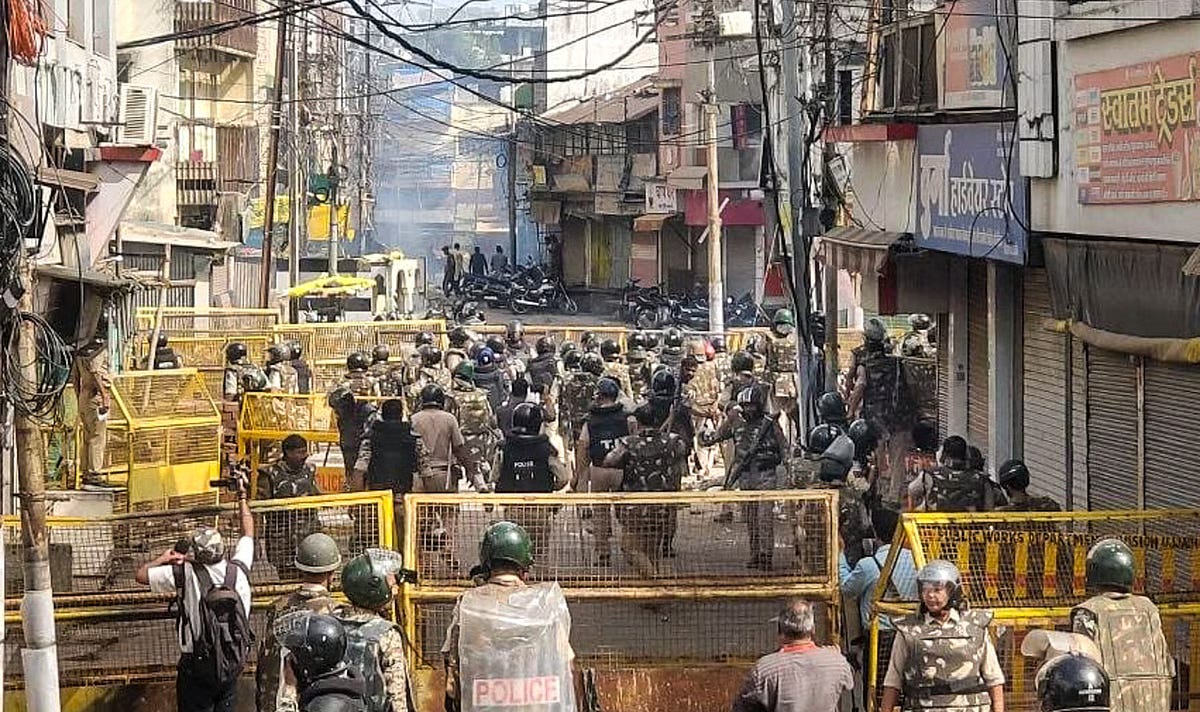
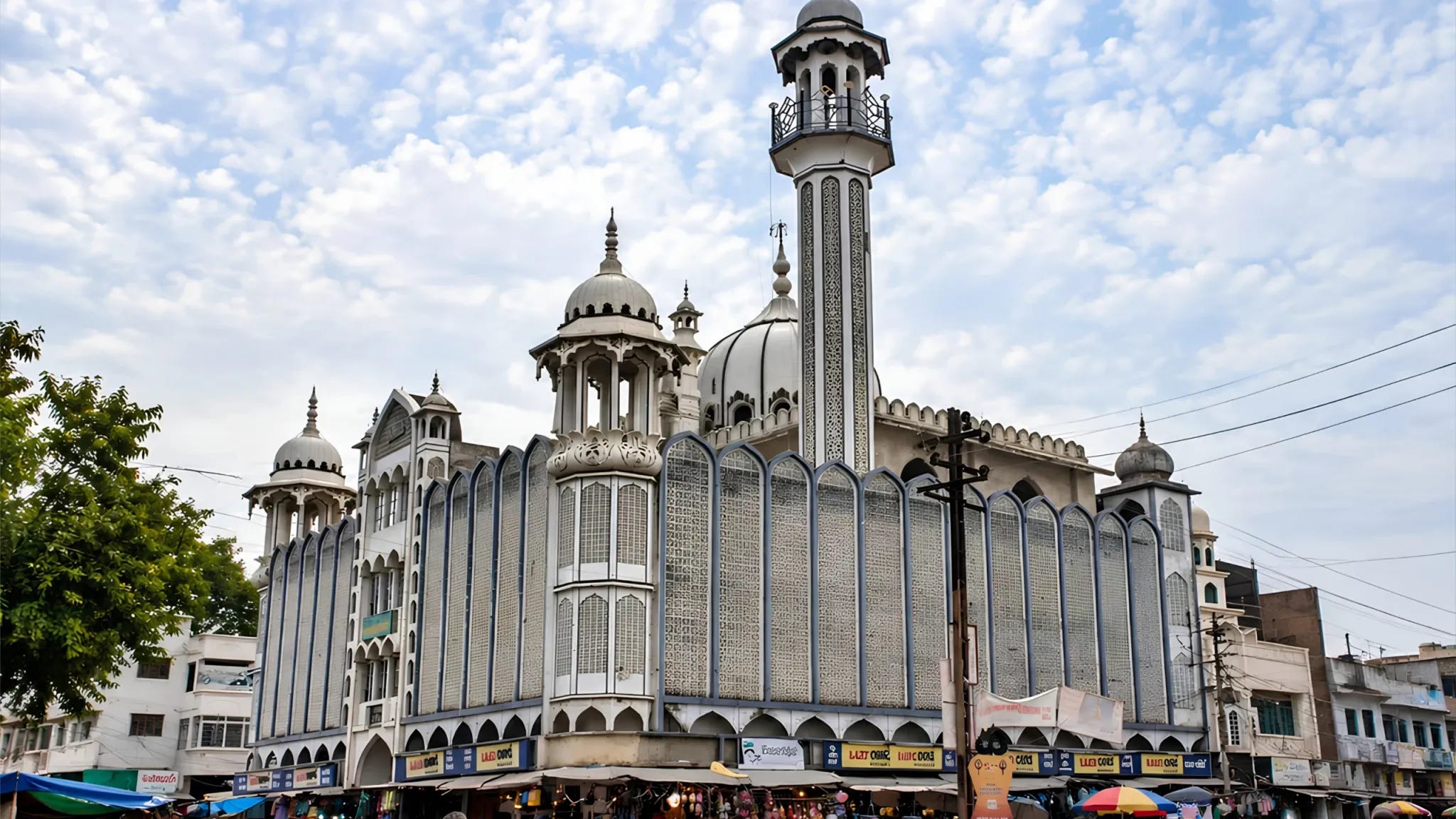
The three-foot slab of the Shahi Masjid at Ujjain’s Chatri Chowk was never the point. The road-widening project that demanded its removal, the 15-metre corridor cleared for the 2028 Simhastha Kumbh, and the ₹25,000 crore infrastructure push to accommodate 40 crore pilgrims. These are the languages of logistics, of safety, of public interest. But a mosque that has stood for 636 years, if the imam’s claim is to be believed, is not an obstacle to be measured in feet. It is a claim to belonging.
And when the state, through the ordinary machinery of municipal notices and High Court dismissals, reduces that claim to a negotiable quantity of square metres, something far more consequential than a road is being built. A hierarchy of belonging is being codified.
This is not a story about India alone. It is a story about the convergence of three forces that are reshaping plural societies across the globe: the rise of majoritarian politics, the industrialisation of media bias, and the consolidation of state power into instruments of demographic preference. Ujjain is the laboratory. The results are already in.
The machinery of majoritarian politics operates through a simple arithmetic. In a first-past-the-post democracy, numbers are power. Muslims constitute 14.2 per cent of India’s population but hold 4.4 per cent of Lok Sabha seats, a representational deficit approaching two-thirds, the lowest share in six decades. In the state assemblies of West Bengal, Tamil Nadu, Assam, Kerala, and Puducherry, Muslim representation has fallen to 107 MLAs out of 823, a full percentage point below the community’s population share.
The BJP, which has governed Madhya Pradesh for most of the past two decades, has no Muslim MPs at all. When a community is structurally invisible in the institutions that allocate power, its claims to space become structurally negotiable. The road widening at Ujjain affected 272 structures, including Hindu temples and homes.
But the Hindu temple that loses a boundary wall rebuilds. The Muslim mosque that loses a prayer hall, a minaret, and an outer worship area is wounded in a way that does not heal, because the wound is not to stone but to presence. The state calls this equal treatment. The community experiences it as erasure.
The media ecosystem does not merely report this erasure; it pre-interprets it. Edward Said’s Orientalism taught that the production of the “Orient” was never about facts on the ground but about the needs of the dominant culture. In contemporary India, that lens is internalised. When Muslim residents stage overnight sit-ins to defend a historic mosque, the visual grammar of the coverage is already written: stone-pelting, mobs, tear gas, rumour-mongering.
Police FIRs against “unnamed content creators” for inflammatory speech extend the criminalisation into the digital sphere. The community’s fear of total demolition—a fear grounded in the documented pattern of bulldozer demolitions across Uttar Pradesh, Madhya Pradesh, and beyond—is pathologised as rumour. The state’s narrative becomes truth by default.
Amnesty International recorded 128 targeted demolitions between April and June 2022 alone, rendering 617 people homeless, disproportionately Muslims. This is not a rumour. It is a pattern.
The state power that executes this pattern has learned to speak in the language of universality. The Supreme Court’s November 2024 judgement on “bulldozer justice” established pan-India guidelines requiring 15-day notices, personal hearings, and video documentation. The Ujjain Municipal Corporation complied. Notices were issued. Orders were passed under Section 305. The High Court reviewed the petitions and dismissed them, ruling that the infrastructure expansion served a necessary public interest. The procedural box was ticked.
And that is precisely the danger. When legality becomes a fig leaf for substantively persecutory outcomes, the rule of law does not protect the minority; it legitimises the majority’s preferences. The mosque community had access to courts. Its petitions were heard. They were dismissed. The law provided the appearance of remedy without the substance of protection.
The global implications are not abstract. The Ujjain case is a template for what scholars have called “developmental communalism”: the use of infrastructure projects, urban renewal schemes, and mega-events to achieve spatial reconfiguration along religious lines while maintaining plausible deniability. From the Sabarmati Riverfront in Ahmedabad to the Delhi-Meerut Motorway, the pattern recurs: Muslim neighbourhoods classified as encroachments, Muslim places of worship rendered obstacles to progress, Muslim communities displaced in the name of the common good.
The projected 40 crore pilgrims of the 2028 Kumbh are invoked not as a hypothesis but as an inevitability that retroactively delegitimises all prior claims to the space along their routes. The future outweighs the past because the future is quantified and the past is merely qualitative.
This is the raw exposure of how majoritarian politics, media bias, and state power converge. The mosque’s three-foot slab is not rubble. It is a data point in a global trend. The question is not whether India is a democracy; it is. The question is what kind of democracy emerges when the permanent minority is asked to surrender its heritage so that the transient majority can pass through.
The answer, based on Ujjain, is a conditional pluralism: a pluralism that tolerates the minority only to the extent that the minority does not obstruct the majority’s projects. The mosque can remain, but only in diminished form. Belonging is permitted, but only on the condition of partial erasure.
The Shahi Masjid at Chatri Chowk is a witness. It has stood longer than the Mughal Empire, longer than the British Raj, and longer than the Indian Republic. Its partial removal is not an accident of municipal planning. It is a signal. The signal is that in the emerging architecture of majoritarian governance, minority sacred space is not inviolable. It is negotiable.
And what is negotiable in Ujjain today will be negotiable elsewhere tomorrow. The world should be watching, not because India is exceptional, but because it is not. The bulldozer at the altar is a global instrument now. The only question is where it parks next.
