


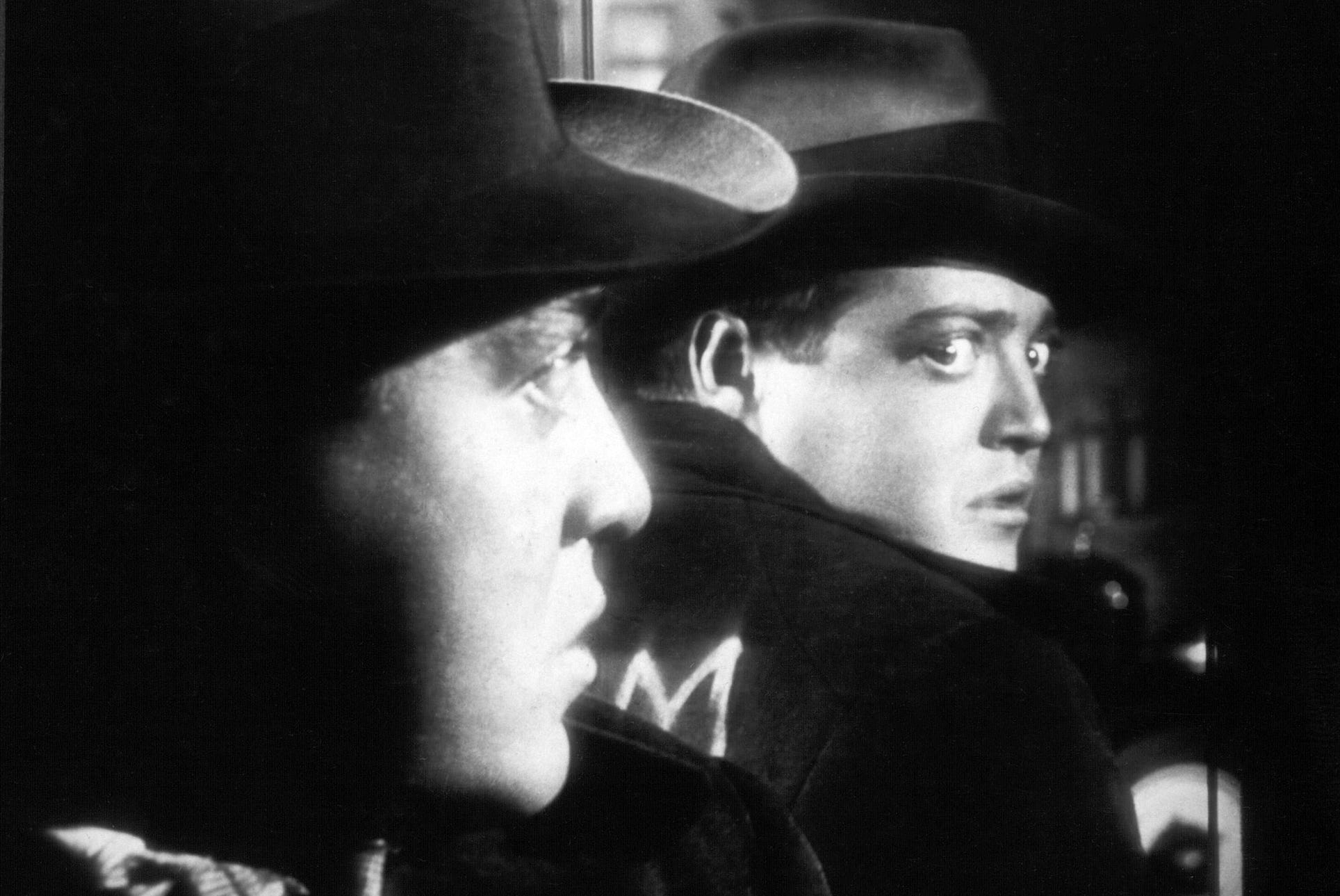
Re-reading Robert Kurz’s 2001 essay “Hysterical Populism,” I was struck by how presciently it speaks to today’s implosive constellation. To be sure, socioeconomic crisis and populist sensationalism tend to go hand in hand. But Kurz argues specifically that the hyper-mediatisation of the figure of the sexual offender fulfils an ideological role, beyond the legal aspects concerning the prosecution of the offender in question. Here are some passages worth quoting (translation slightly amended):
Over the last few years, as the crisis has come to a head, another projection has gained ground alongside the terrorist and the speculator: the child abuser has become the latest incarnation of Evil. No magical invocation of the devil can do without a sexual component. [...]
Once again, mainstream society must externalise and personify one of its own structural aspects as a symbol of Evil. [...] Capitalist society is hostile to children anyway. At the same time, this social form is hostile to pleasure to its very core. The slogan of “sexual liberation” raised by the 1960s student movements—whose protagonists failed to overcome prevailing social forms—has merely led to the sexualization of media and advertising, while the actual sex life of the commodity-consuming individual is more miserable than ever. [...]
The legitimate impulse to denounce and combat male violence against women and children—a problem that intensifies in a crisis-ridden world—turns into its opposite, becoming a tool to demonise the phenomenon rather than critique it, thereby blocking any path to the root of the problem. [...]
Mythical apparitions of Evil are necessary to discharge the negative energy of the social crisis in an irrational and anti-emancipatory way. [...]
Fritz Lang’s film M (M—A City Searches for a Murderer, 1931), set in Berlin against the backdrop of the Great Depression, chillingly illustrated how the hunt for an unidentified sex criminal merges into a mass-psychological syndrome, generating a climate of suspicion, denunciation, and blind violence. Society reveals a grotesque face no less terrifying than the grimace of the murderer himself.
Kurz here diagnoses an ideological circuit that feeds on moral panic. As Theodor Adorno and Herbert Marcuse argued decades earlier, the modern “work society” demands the devaluation of bodily pleasure. Marcuse termed the neutralisation of Eros “repressive desublimation”; in Dialectic of Enlightenment, Adorno and Horkheimer wrote that “the mass production of the sexual automatically achieves its repression.” The overall point is that, by saturating advertising and entertainment with commodified sex, consumer capitalism strips life of genuine sensuality, leaving behind, at best, a joyless and functional routine. As Jean Baudrillard noted later, the vanishing of eroticism is masked by an overexposure to sexual signs—a configuration that orients the modern subject towards perversion.
Luis Buñuel offered an almost exact cinematic counterpoint in The Phantom of Liberty (1974), in the scene where a suspicious-looking man gives two young girls a set of photographs, with instructions not to show them to adults. When the parents eventually inspect them, they react with horrified fascination—as though confronted with hardcore pornography—only for Buñuel to reveal that the images depict serene landscapes and tourist monuments. While the scene is funny, its surreal framing is oddly unsettling. One way of reading it is that obscenity here resides less in the image itself than in the moralising gaze that eagerly anticipates it. In an analogous way, today’s scandal culture does not simply reveal sexual transgression; it trains its audience to engage with social reality through the anticipatory lens of depravity.

What Kurz adds to this well-trodden reading is crucial: the chronic erosion of desire, traceable as a pervasive feature of contemporary experience, sharpens into acute pathology as socioeconomic crisis turns endemic. When the promises of globally financialised capitalism falter—as with today’s AI-and-debt narratives—and material life grows precarious for most, the frustration generated by a pleasure-hostile society requires a psychic outlet. The “subject supposed to enjoy” of modern consumer culture, then, promptly receives its reward: a diet of mediated scandals and public unmasking that is meant to work as compensation for structurally denied enjoyment.
Today’s relentless mediatisation of the sexual offender is one privileged way of performing this ideological recuperation—a scapegoating mechanism par excellence. Rather than confronting how structural crisis deforms human relationships from within, the media spectacle externalises the systemic rot onto modernity’s atomistic underside: it splashes the sexual monster across the front page. By obsessively consuming these stories, a society starved of desire gets to experience a vicarious thrill of moral purity. Thus, the mainstream media transforms societal misery into a libidinally rewarding drama of Good versus Evil.
Crucially, this perpetual news bombardment also serves as a powerful smokescreen for systemic violence. The spectacle of depravity keeps public outrage safely tethered to individual, easily stereotyped moral failings. Meanwhile, the institutionalised atrocities of our time—from the “forever wars” and the ongoing genocide of Palestinians in Gaza to widespread economic contraction—are perversely sanitised, normalised, or simply erased. The fixation on the sexual offender thus inoculates the real machinery of mass destruction against structural critique.
No wonder, then, that Western media headlines are currently saturated with high-profile criminal convictions, celebrity prosecutions, institutional abuse inquiries, and dark stories of marital perversion. I won’t name any of them; not because I’m disputing the seriousness of the underlying allegations, but because I don’t want to feed the cycle. Critique here targets not the substance of the wrongs themselves, but the form through which these cases are consumed as instances of moral emergency. The mediatic parade of depravity is deeply ideological because it channels structural frustration into moral discharge; it recasts sexuality as a “divide and rule” gender war; it positions the existing order, increasingly authoritarian in its response to crisis, as the indisputable arbiter of justice; and it ensures that the systemic and truly degenerate violence of “crisis capitalism” remains safely off-screen.