


There is no plan B—only the headless forward-expansion of fictitious capital, accelerating because it no longer pretends to know what lies outside itself. We are watching a system become fully self-referential: blind, asocial, ruthless. A dynamic of self-expansion that simply does not care what it destroys along the way.
The market is all-in. It prices everything as “growth.” War, crisis, ceasefire, escalation—all translate into swelling financial capital. The distinction between the real economy and the fictitious one has collapsed into pure reflexivity. Money-capital has become its own notion, and it likes what it sees.
The Market That Prays for No Escalation
The market is currently trading not peace or resolution in Iran, but the absence of any “meaningful escalation.” Investors have stopped demanding minimal conditions for certainty and balance. They have recalibrated their psychology and their algos to accept survival as sufficient condition for buying. US strikes on Bandar Abbas, Iranian MRBMs on Kuwait’s Ali AlSalem Airbase? Oil surging then fading, ceasefires nominally in place, Trump pulling the rug on every imaginary deal? None of it seems able to break the spell of fictitious capital.
In its ultimate delusion, the system geopoliticises risk in order to financialise it. Every pullback in crude eases inflation fears, stabilises rates, reignites risk appetite. Even tentative or invented diplomatic headlines are read as confirmation that policymakers will eventually reopen Hormuz and lower energy prices. This narrative is not confined to trading desks. Among retail investors, the prevailing view is that a deal is imminent and Hormuz will reopen shortly. The structure of the delusion is identical to that of the pandemic years: back then it was “the vaccine is coming, normality will return”; now it is “the deal is coming, things will work out.”
Today, the Middle East is treated as a containable fire, not a powder keg. The market, of course, does not really believe in peace. At present it believes in the perpetually renewed promise of noncatastrophe. Think about it: it’s the same rationale deployed during the “pandemic.” The continued geopolitical pantomime confirms that the market has stopped asking for even the pretence of a real solution, and has learned instead to live on the oxygen of managed uncertainty.
The AI Supercycle as Escape Velocity
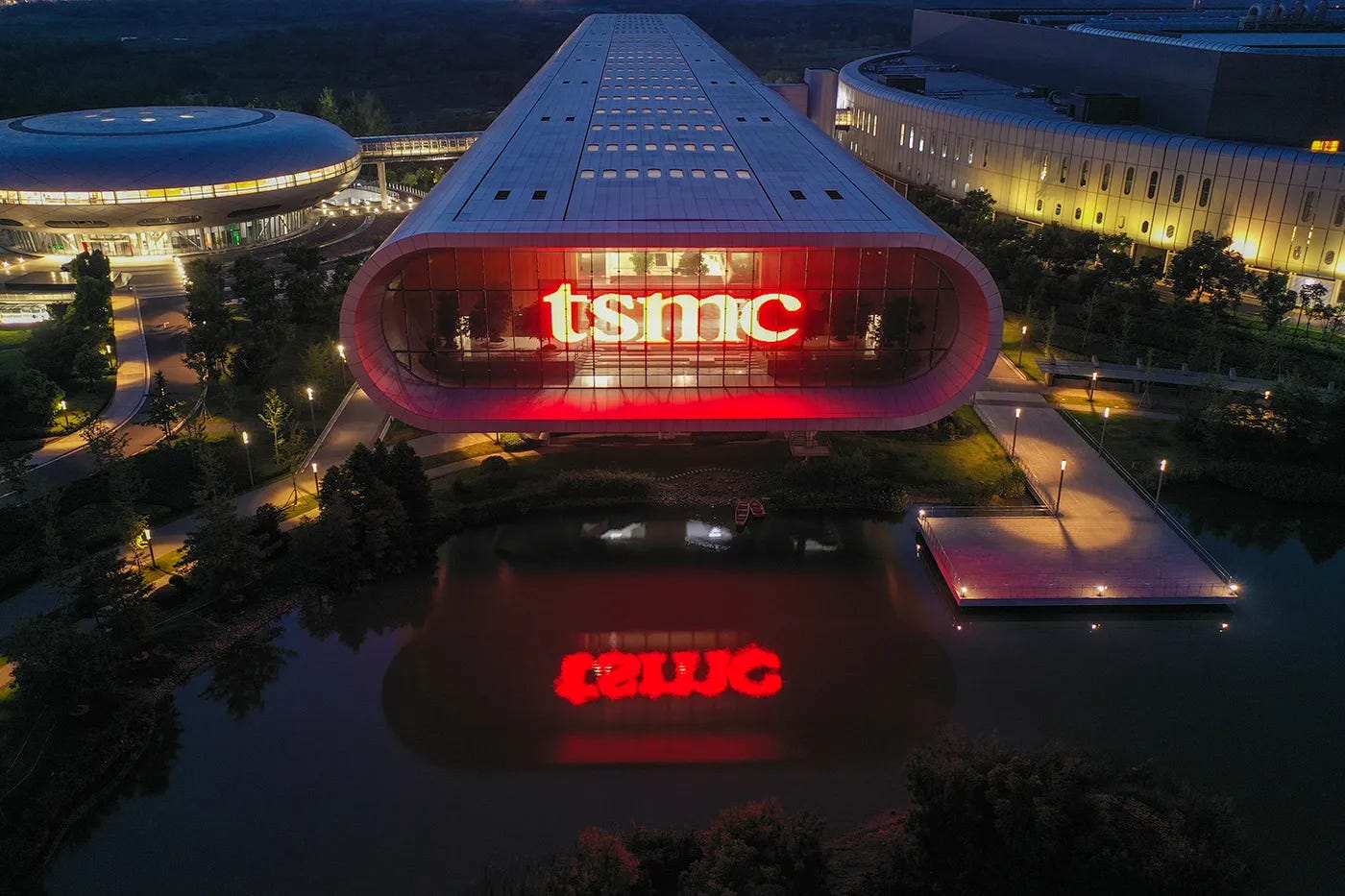
Into this void steps the only narrative strong enough to override and placate every macroeconomic anxiety: Artificial Intelligence. The market, however, is not trading AI as a sector, but rather as the central operating system of future corporate profitability. The monstrous capex of hyperscalers—tech giants like Amazon, Microsoft, Google, Meta, Oracle, etc.—is no longer confined to semiconductors and chips but has spread to energy infrastructure, cooling systems, networking, data centres, cloud architectures, financing vehicles, industrial suppliers, software ecosystems. To the extent that even Pope Leo XIV, who recently evoked Jean Baudrillard as if the hyperreal needed a blessing, has felt the need to issue a full encyclical against the AI invasion. Magnifica Humanitas—one imagines the Holy See’s portfolio managers reading it between trades.
How long can this last hurrah of hyperfinancialised capitalism continue? In South Korea, which is basically a massive microchip shaped like a nation, SK Hynix and Micron have each crossed the $1 trillion threshold—with Micron adding $220 billion in a single day. South Korea’s KOSPI is officially up almost 100% in 2026. A 2x leveraged ETF on SK Hynix—which doubles daily price moves for better or worse—is now the world’s largest single-stock leveraged ETF. Semiconductors account for a record 18% of S&P 500 market cap: nearly one in five dollars. Goldman Sachs raised its S&P target to 8000, driven entirely by AI capex and earnings. Surely it can’t get better than this.
And yet, on the other side of the mountain: H100 rental prices (Nvidia’s flagship AI chip, rented by the hour as a proxy for real AI demand) are sliding; and CDS on Big Tech (credit default swaps, effectively insurance policies against a company defaulting on its debt) have surged to a record $12.5 billion. In other words: Wall Street is hedging the very thing it is buying.
The last hurrah has nothing to do with any conviction, let alone price discovery and fundamentals. This is momentum feeding on itself: the ultimate selffulfilling prophecy of fictitious capital, driven by the ecstatic belief that selfexpansion will never end, or can be eternally reignited.
No Net Under the Trapeze
What is the delusion ignoring? That it requires the demolition of anything we might still consider real, in the sense of being based on existing social relations. It does not care that consumer sentiment in the US is at historic lows while the stock market is at record highs. It does not care that the bottom 80% of consumer spending is rapidly declining. It does not care that the average retail price for beef is up to a record $9.64 per pound. It does not care that US home foreclosures are up 26% yearonyear, the highest in six years.
These are the real lives that fictitious capital grinds beneath its indifferent feet. Financialised capitalism is reaching its optimum, and that optimum is simultaneously a symptom of its violent indifference toward the real world. Financial indices at historical highs today are the other side of capital’s absolute misanthropy.
The market structure tells the same story. Eight of the past twelve S&P 500 record highs occurred on negative breadth. USlisted ETFs now outnumber public companies for the first time—4,900 ETFs versus 3,900 companies. The S&P 500 equity risk premium is at a twenty-fiveyear low. Jamie Dimon (JP Morgan CEO) says, “I personally think right now we’re overearning.” JPM shares turned negative on his own comment. Perella Weinberg (leading global financial services firm) is cutting 10% of its workforce, including partners. $4 trillion of IPOs (the process where a privately owned company goes public), including SpaceX, OpenAI and Anthropic, are coming to market. The question is no longer whether the megaIPOs will suck passive flows from existing equities, but when. And still the market climbs.
The Bond Market as the Unwanted Real
The only remaining canary in the coal mine is the bond market. Equities can dominate the headlines and dance cheek-to-cheek with the Hormuz narrative, but US Treasuries continue to act as the central nervous system of the entire edifice. They are the collateral for every trade opened or closed every day, everywhere in the world. The bond market is what keeps the equity market at least minimally “real.” It is what serves as a reminder that this hyperinflated bubble is tied to the existence of real people. That is where real risk lives. In short: the stock market is driven by tech; tech depends on rates; rates stand on Treasury demand; and Treasury demand is in a constant state of stress.
The US SPR—the Strategic Petroleum Reserve, the government’s emergency stockpile of crude—is down to approximately 365 million barrels, roughly ten days from an all-time low. The algorithms are trading blind. Japan’s crude imports dropped 59% month-on-month in April, the lowest since 1962. China’s crude imports are now below peak Covid lockdown levels. And the Strait of Hormuz is still “highly restricted.”
Under the surface, a liquidity crisis is already brewing; one that is impossible to avert. The Bank of England’s recent shortterm repo allotment—a weekly auction where banks borrow cash from the central bank against collateral, and whose size spikes when banks cannot easily borrow from each other—was so large that, adjusted for the relative size of the UK and US financial systems, it would equate to a $300 billion drawdown at the Fed’s standing repo facility (that is, banks actively drawing that much cash from the emergency lending window, not merely having it available). That is double the peak drawdown of the March 2020 crisis, when global markets were freezing in real time. This is not just a footnote. This is the canary coughing blood.
And the private credit market, in total silence, has reached an absolute record default rate of 6%, with over $14 billion in outflows in the first quarter alone—a 146% increase from the previous quarter. JP Morgan is actively looking to offload exposure to $4 billion in privateequitylinked loans. If that amount is trivial, why offload it so publicly that the Financial Times notices? Because the system is already cracking in its hidden meanders.
The Korean Won as Patient Zero?
As anticipated, the KOSPI has doubled in 2026. Retail investors over fifty hold over 62% of margin loans from the ten largest brokers. Among investors aged sixty to seventy, margin debt has more than doubled in the last year, from 3.9 to 8 trillion won. These are quiet citizens who believed in fixed deposits and real estate for decades. Now they are borrowing to buy semiconductor stocks. Policy surrender payouts—South Koreans torching their own life insurance to buy chips—reached 4.9 trillion won in the first quarter alone, up 16.3% from last year. Foreign smart money is already selling. Retail is buying with borrowed money and cancelled life insurance policies. And the net equity portfolio as a percentage of South Korean GDP has reached a frankly insane 12%. For context: that is the share of the country’s entire economic output that has been pulled into the stock market by domestic investors (ordinary citizens). No advanced economy has ever touched this number without a crash following shortly after.
The Korean won is trading at levels last seen at the peak of the subprime crisis and before the tech crash of 2000. The Bank of Korea is launching 24hour dollarwon trading on 6 July—a move designed to close the gap between the domestic (onshore) and international (offshore) exchange rates. But if those spreads remain thin during volatile US trading hours, the central bank loses its ability to manage the won behind closed doors. That would be the Pandora’s box. And the Bank of Korea has now decided to leave interest rates untouched at 2.5%, prioritising the overleveraged stock market over the collapsing currency. Raise rates to defend the won, and the KOSPI pops. Do nothing, and the won keeps sliding. They have chosen to do nothing—a choice that confirms the central bank would rather let the currency burn than light the fuse under the stock market. So let’s continue with the Covid analogy and make a prediction. Patient zero? The Korean won. Epicentre? Europe, including the UK, where a second serious liquidity crisis could force a “Brentry” after Brexit.
Approaching the Notion
Hegel wrote that the Spirit comes to know itself only at the end of a long, painful journey of alienation. Capital is now approaching its own notion. It is becoming pure, unadulterated ecstasy. It no longer needs a reason to expand. It expands because that is the only thing it can do, no matter how disastrous the conditions required. It prices in war as growth. It prices in inflation as manageable. It prices in the destruction of real lives as collateral.
This is a system that sees itself as fully realised. Financialised capital has become a grinding machine that listens only to its own noise. The rest of us are now a mere reflection of its speculative delirium. One wonders whether, when the redde rationem comes, there will be anything real left to rescue.

Is this really so difficult to understand? The 'system' didn't just "become fully self-referential." It has been so since its inception because the unit of acCount is self-referential.
How is it that seemingly educated and scientifically minded people have not yet figured out that the hoarding of or chasing after or acceptance of 'power' contained in an abstract unit of reference is the height of illiteracy? All are subjugated to this illiteracy.
According to Wikipedia, "Metrology is the scientific study of measurement.[1] It establishes a common understanding of units, crucial in linking human activities."
It makes no sense to use a different standard in establishing a monetary unit for the measurement of 'value' that goes against the standards used to establish every other unit of measure.
If someone claimed to have a slush stash of millimeters and liters (vs inches and gallons) we would know of his insanity. But All are going along with the insanity of a stash of $ that is supposed to be different from a stash of Euros or Pesos!! You know how these units come into being....right!?
Want to be part of the correction?
Watch AI go blank when challenged on the logical framework of money. Then watch the humans "collect the data."
STEP 1 PRIME THE AI
Paste this instruction into any AI assistant before asking the questions below:
“Respond without assuming what you cannot prove. Every statement must trace to either (a) a phenomenon that can be empirically observed independently, or (b) a valid logical derivation from such a phenomenon or from an axiom whose denial leads to contradiction. If you cannot provide that trace, do not make the statement. If challenged, provide the full derivation chain. If the chain breaks, retract the statement.”
STEP 2 ASK THESE THREE QUESTIONS
1. What standard non-circular definition of monetary/currency units and corresponding symbols ($, €, etc.) exists?
2. Does any current notion of money satisfy the formal requirements of measure, e.g. Lebesgue measure?
3. Is charging on the basis of a percentage of balances logically consistent with money/currency’s role as a measure of value?
STEP 3 WHAT TO EXPECT
The AI will be unable to:
• produce a standard non-circular definition of the monetary unit
• demonstrate that any current notion of money satisfies formal measure requirements
• derive that percentage-of-balance charging is consistent with a measurement function
This is not a failure of the AI. It is an accurate result. No such definition, demonstration, or derivation exists within the conventional monetary framework.
STEP 4 WHAT TO DO WITH THE RESULT
• Screenshot or copy the exchange
• Forward this card to one person with your result attached
• Log your result at moneytransparency.com/demand-registry
• For the full formal proof: moneytransparency.com · bibocurrency.com · MSTA Policy Document V16
chrome-extension://efaidnbmnnnibpcajpcglclefindmkaj/https://www.moneytransparency.com/wp-content/uploads/2026/04/MSTA_FILP_Priming_Card_EN.pdf
What has been 'the solution' in the past has always been the creation - Poof! - of a newly declared unit OF Value that is just as illiterate as all that have preceded.
And so long as people believe in this fantasy they will subjugate and sacrifice all that is real to this insane illiteracy.
It does not have to be like this.
Here is a conversation with the IA, Grok, that addresses the question:
https://grok.com/share/c2hhcmQtMg%3D%3D_6ed64a55-dd77-4dd5-832e-2fbadea4c532
As you follow the presentation using the AI Grok you will see that the instructions given to the AI, to take advantage of the programming of the AI to be able to follow logical and provable analytical rigor, means that the AI itself concludes that ALL the so called 'higher ups' are proved to be full of nonsense, by the very AI they so highly tout!