


On 19 November 2026, the International Court of Justice did something it had never done in eighty years. By a margin of nine votes to six, it found a sovereign state—Myanmar—directly responsible for genocide against the Rohingya. President Yuji Iwasawa read the operative paragraphs for three hours. The Court found killing, serious bodily and mental harm, and measures intended to prevent births, all committed by Myanmar’s security forces and state organs.
It found that Myanmar failed to prevent and punish the genocide. It ordered reparations, restitution, and a report to the court within two years on how the return of more than a million displaced Rohingya will be made safe, voluntary, and dignified.
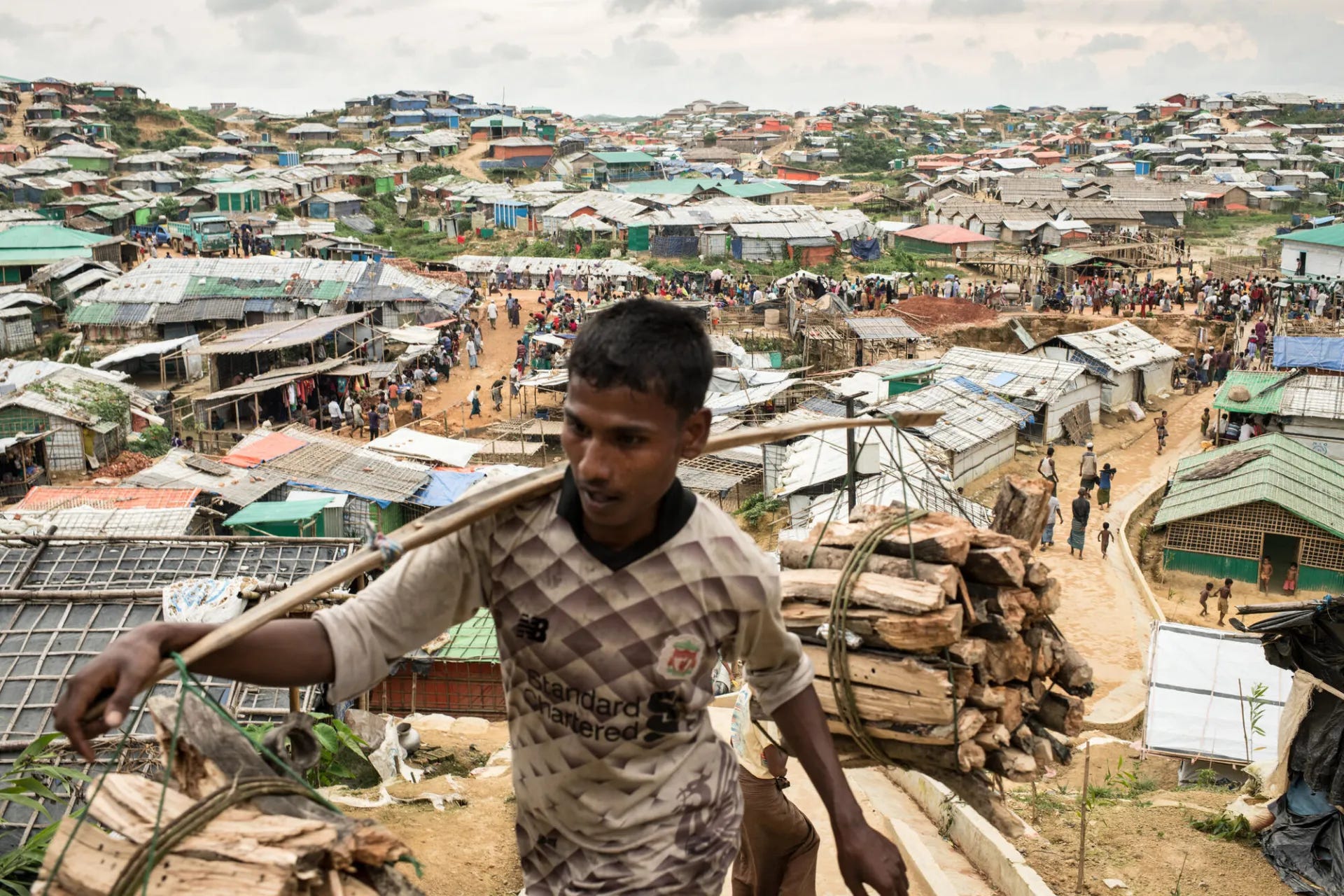
For the survivors in Cox’s Bazar, the verdict landed like a delayed monsoon. They watched on screens in the camps, wept, prayed, and held placards thanking The Gambia. One refugee leader, Mohammed Osman, whose parents and four siblings were killed, said simply, “We were not lying about the genocide.” That sentence should sit in the conscience of every diplomat who ever quietly suggested the Rohingya exaggerate or that the word “genocide” was too legally risky, too diplomatically inconvenient, or too destabilising for regional harmony.
The Court has now removed that excuse. The question is what the international community does with the clarity it asked for.
The first, uncomfortable fact is that the verdict arrived in the same week that ASEAN leaders in Manila agreed to gradually restore Myanmar’s political representation if the junta makes “progress” on the Five-Point Consensus. The ASEAN statement did not mention Rakhine, did not mention the Rohingya, and did not mention repatriation. The region’s main diplomatic document on Myanmar, issued four days before the genocide judgement, could not bring itself to name the victims.
That is not realism. It is a choice to look away, dressed as pragmatism. Every handshake with Min Aung Hlaing’s representatives after 19 November now carries a question: what exactly is being normalised? A regime that the world’s highest court has found presided over genocidal acts.
The second fact is territorial. The Court ordered Myanmar to facilitate the return of the Rohingya to their places of origin. But the Myanmar state no longer controls most of the territory to which they would return. The Arakan Army now controls fourteen of seventeen townships in Rakhine State and virtually the entire Bangladesh–Myanmar border. The AA has built a proto-state with its own courts, taxes, and security structures, but it does not operate a civil registry.
It has no legal power to grant citizenship. It rejects the Rohingya as a recognised ethnic group and uses terminology that denies their indigeneity. A repatriation order addressed to Naypyidaw is therefore legally binding and materially impossible at the same time. Any serious return process must involve Dhaka, Naypyidaw, and the AA—and a guarantee that the Rohingya do not return to the same statelessness that made them killable in the first place.
China, which retains channels to both the junta and the AA and which guards its Kyaukphyu port and pipeline corridor, is the only external power with the leverage to convene that conversation. It should be pressed to use it.
The third fact is legal and the most consequential for the rest of the world. The Court did not merely confirm a familiar pattern of killing and displacement. It treated systematic sexual and reproductive violence as constitutive acts of genocide, not as collateral harm. It treated the deliberate starvation of a population—the “Four Cuts” strategy, the movement permits, and the confiscation of land and fishing grounds—as part of a genocidal architecture under Article II(c) of the Convention. It also held that genocidal intent can coexist with counter-insurgency objectives: a state cannot defeat a genocide claim simply by pointing to an armed adversary.
Those doctrinal moves will now travel. They will be argued in South Africa v. Israel, in Sudan v. UAE, in Ukraine v. Russia, and in every future case where a state claims that its methods were military necessity rather than group destruction. The judgement is not only about Myanmar. It is a warning to every government that believes the language of security can launder the logic of elimination.
Australia’s response has been careful and decent. The government honoured the victims, noted the Court’s findings, and pointed to more than $1.26 billion in humanitarian assistance since 2017. That aid has kept people alive. But aid is not accountability. Australia has sanctions on military figures and supports international mechanisms, yet it has not yet moved to the next tier: coordinating universal-jurisdiction pressure, pushing for a Security Council referral of the post-2021 crimes that the IIMM continues to document, and using its standing with ASEAN to insist that re-engagement with the junta is conditioned on compliance with the Court’s orders.
The verdict gives Canberra a diplomatic instrument it did not have before. It should use it, not file it. But it’s only as strong as the global response that follows it. And on that measure, the world is already failing the Rohingya in slow motion.
The architecture of enforcement is broken in plain sight. The UN Security Council remains the only body capable of giving an ICJ judgement coercive force under the Charter, and it is paralysed by design. China and Russia hold vetoes, and both have every incentive to shield Myanmar—Beijing because of its pipelines, ports, and border stability; Moscow because it is a major arms supplier to the junta and will dismiss the ruling as political.
The Burmese military regime rejected the verdict before it was even read. A Security Council resolution to enforce compliance is therefore unlikely to survive a vote. That is not a reason to stop tabling one. It is a reason to make the veto visible, to force states to own their protection of a genocidal regime, and to shift the centre of gravity of accountability away from New York and towards capitals, courts, and coordinated sanctions.
The United Kingdom has shown what a serious response looks like, at least in its first move. Within hours of the judgement, Foreign Secretary Ed Miliband ordered the expulsion of Myanmar’s defence attaché, summoned the regime’s chargé d’affaires, and called for an urgent Security Council session. Burma Campaign UK has demanded more: a Security Council resolution on enforcement, new sanctions on jet fuel and oil and gas revenue, an end to the softening of policy towards the junta, and support for INTERPOL red notices against Min Aung Hlaing and the twenty-four other officials named in the Argentine arrest warrants.
Those are the right asks. The question is whether London sustains them beyond the news cycle and whether other capitals match them. The United States, by contrast, enters this moment with its credibility in question: reports before the verdict indicated that Washington had threatened to sanction ICJ judges if they ruled for genocide. That is not a policy of accountability. It is a warning to the court itself, and it sits alongside a broader scepticism towards international tribunals that has already unsettled allies and emboldened perpetrators.
The most promising enforcement track is not at the Security Council at all. It is in national courts. In February 2025, an Argentine court issued twenty-five international arrest warrants for senior Myanmar military and civilian officials, including Min Aung Hlaing, under the principle of universal jurisdiction—the only initiative anywhere in the world to have produced arrest warrants against the architects of the genocide. Those warrants are not symbolic. They mean that every trip Min Aung Hlaing takes, every airport he transits, and every country that hosts him becomes a legal and diplomatic battleground.
The verdict removes any remaining excuse for states to ignore those warrants, to refuse to enforce them, or to pretend that universal jurisdiction is a boutique European hobby. The International Criminal Court’s pending arrest warrant application against Min Aung Hlaing for deportation and persecution must also be decided, and the IIMM’s evidence of post-2021 crimes—aerial bombings, artillery shelling, sexual and gender-based crimes, torture, and the obstruction of humanitarian aid—must be fed into every national prosecutor’s file that will accept it.
Then there is the question that no amount of legal victory can answer on its own: the return. Bangladesh has welcomed the verdict and called on global powers to use it to pressure both the Myanmar government and the Arakan Army to begin safe and dignified repatriation. But the IIMM has been explicit: conditions in Rakhine State are not yet conducive to safe, voluntary, dignified, and sustainable return, and the crimes and violence that caused the displacement have not ended. The Arakan Army now controls most of the territory to which the Rohingya would return, and it has its own record of abuses against Rohingya civilians.
Any repatriation process that ignores the AA or that treats return as a matter of logistics rather than citizenship and safety will fail. China, which has channels to both the junta and the AA and which has brokered repatriation talks in the past, is the only external power with the leverage to convene that conversation. It should be pressed to do so—not as a favour to Bangladesh, but because a permanent refugee crisis on the Bay of Bengal threatens Beijing’s own investments and regional stability.
India will move carefully, as it always does, weighing its Kaladan transport project and Sittwe port against its border security and its reluctance to use the word genocide. ASEAN will choose the middle path, because it always does—issuing a statement that takes note, avoids the word Rohingya, and keeps the door open to re-engaging the junta. The OIC and The Gambia have done the heavy legal lifting and deserve the credit, but they cannot enforce the judgement alone. The global response cannot be left to the states with the clearest moral position and the least material leverage.
The verdict gives every state party to the Genocide Convention a shared obligation and a shared instrument. The question for global strategists and policymakers is not whether the judgement is legally sound—it is. The question is whether they will use it: to table the resolution that will be vetoed, to enforce the warrants that already exist, to sanction the jet fuel and the revenue streams that keep the military flying, to condition every diplomatic engagement with Naypyidaw on compliance with the Court’s orders, and to insist that no Rohingya return to a Rakhine State that still denies their citizenship and their safety. The Court has spoken. The rest is a choice.
The enforcement gap is real. China and Russia can veto at the Security Council, and they will. Min Aung Hlaing remains in power and has dismissed the word “Rohingya” as imaginary. But the judgement strips the junta of the one thing it cannot manufacture: legitimacy. It arms survivors with an irreversible judicial truth.
And it tells the Rohingya, finally, that the world’s highest court has seen what they endured. The sentence is not yet served. But the verdict has been read. The responsibility now belongs to the states that claim to uphold the Convention—and to the region that has spent nine years hoping the problem would stay in Bangladesh.