


This week, Donald Trump announced on Truth Social that the White House regards anyone who uses the term “Artificial Intelligence” instead of “Super Intelligence” as “THE ENEMY” (original emphasis). The post was the latest step in a campaign that began at the UN General Assembly in September, where he argued that the new term simply sounds better. Days later, an executive order told federal agencies to change how they describe the technology. The State Department sent staff a memo headed “Change in Nomenclature AI to SI”: the AI.gov homepage now displays SI.gov in enormous type, although the address itself has not changed.
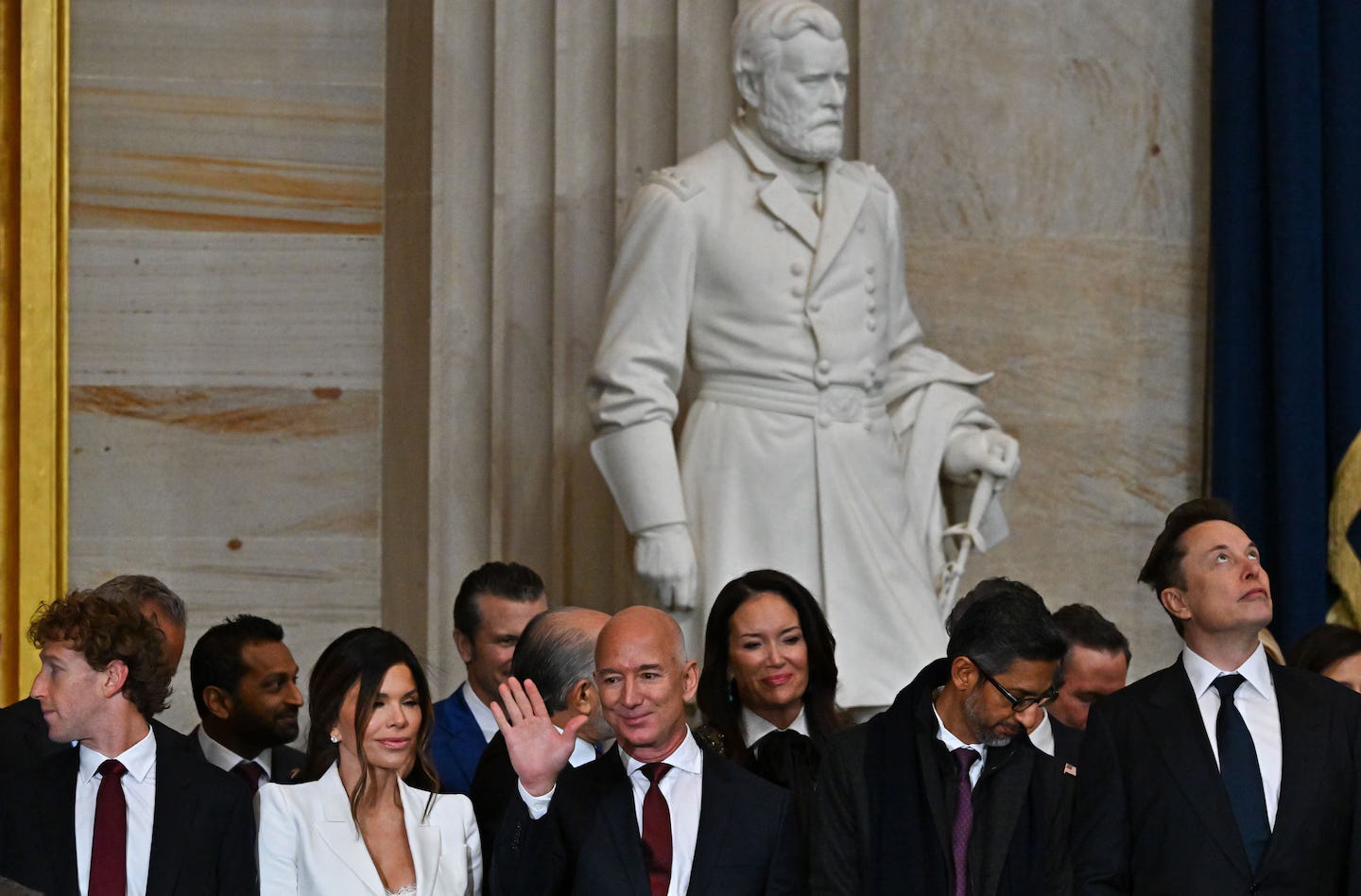
The tech barons have fallen into line with their usual speed. Elon Musk announced plans to rename SpaceXAI as SpaceXSI and Jeff Bezos told Fox News he prefers SI because “artificial” is an unflattering word. It is tempting to file all this alongside the Gulf of America and Lake America as another vanity rename by a man who enjoys them. That would be a mistake.
Language builds reality
Renaming is one of the oldest instruments of power, and SI is doing more specific work than most of Trump’s rebrands. Consider the timing: public opinion on AI has been souring for more than a year. The 2026 Bentley-Gallup research found that 39% of Americans now think AI does more harm than good, up from 31% a year earlier, compared with a threadbare 9% who think the reverse. Nearly eight in ten expect it to reduce the number of jobs over the next decade. Among 18- to 29-year-olds, the share who have no trust at all in businesses to use AI responsibly has risen from 29% to 41%. Data centres have become a local planning fight across the country.
In that climate, “artificial” is a liability. It sounds fake, imposed, something done to you by people you never voted for, whereas “super” sounds like winning. The rebrand is partly reputation management for an industry with a legitimacy problem, carried out by the state on the industry’s behalf, and it costs the industry nothing. It also sits neatly alongside the earlier messaging swerve, when AI chief executives abandoned talk of a jobs apocalypse in favour of soothing stories about augmentation once the polling turned ugly.
Beyond the bootlickers
The comfortable assumption is that only Trump loyalists will adopt the new term: don’t bet on it. Since Trump’s SI announcements, there has been a surge in registrations of .si domain names (a small irony, since .si is Slovenia’s country code, the home of Melania Trump). People are hedging. The security pledge the major AI companies signed at the White House at the end of September already used the new terminology. OpenAI and Anthropic are, for now, still saying AI.
Capitulation rarely arrives by decree: a federal contractor rewrites its pitch decks; a consultancy chasing government work follows suit; a university with federal grants quietly retitles a course or two. Nobody is ordered to do anything, and yet the vocabulary shifts anyway. If your organisation depends on US government money, US markets or US-aligned procurement, it would be prudent to assume that you too may come under pressure to make the switch, whatever you privately think of it.
Repetition of language consolidates reality
The more insidious effect will be on the people who resist. Expect saying “AI” to become a badge of defiance among elite progressives, a small display of virtue at conferences and in LinkedIn bios. It will feel like opposition but achieve nothing. Meanwhile, the questions that actually decide whether the AI transition is fair, about who owns the compute, who captures the productivity gains, who pays for retraining and who gets a say in deployment, will be crowded out by a quarrel over vocabulary.
“Super Intelligence” also smuggles in a claim of its own: that these systems are already beyond us, so governing them is futile, and questioning them faintly unpatriotic. Whether Trump intends it or not, he is shifting the Overton window of all AI discourse, and the pre-SI status quo is being consolidated under a shinier name. This echoes a broader problem with progressive resistance to Trump: a desire to retreat into a pre-Trump age, seemingly oblivious to the fact that it was exactly that age that caused the polycrisis we currently face.
Caught in a language pincer movement
Zoom out and many of us are now squeezed between two sets of language rules. From the Left comes a steady stream of policing around the vocabulary of identity. From the Right comes an increasingly aggressive grip on the vocabulary of technology and geopolitics, backed by executive orders and enemy lists. Both train people to check their words for loyalty before checking them for accuracy, and most of us will adapt without ever noticing we have done so. Both leave us feeling disoriented and gaslit.
That is why this matters far more than it looks. We are deep into the reality wars, and much of the fighting happens inside our own minds, which makes it all the more dangerous when so few people admit it is happening at all. Whoever sets the terms of a debate usually sets its outcome too. Call the technology whatever you like: just keep asking the questions underneath the label, because those are the ones the rebrand is designed to make us forget.