



Southeast Asia is confronting a moral reckoning that cannot be postponed. What is unfolding across parts of the Mekong subregion, particularly in Cambodia, is not merely a crime wave or a governance lapse. It is the quiet normalisation of industrial-scale human exploitation, fused seamlessly with the digital economy, and tolerated long enough to become embedded in national balance sheets. The implications for ASEAN’s future and global trust in the region are profound.
By conservative estimates cited by international investigators and financial crime analysts, cyber-enabled scam operations linked to forced labour now generate between US$12 and US$19 billion annually in Cambodia alone, with regional totals across Cambodia, Laos and Myanmar reaching as high as US$50–75 billion a year. That figure rivals, and in some analyses surpasses, legitimate sectors of the formal economy.
When criminal revenue approaches half of the national GDP, the line between state weakness and state capture becomes dangerously thin.
This is not an abstract humanitarian concern. The victims are tens of thousands of trafficked workers from across Asia and beyond, coerced into running sophisticated online frauds under threat of violence. The secondary victims number in the millions worldwide: retirees in Australia and Europe, middle-class households in North America, and small investors across East Asia who lose life savings to romance and cryptocurrency scams. These operations are not local oddities but components of a transnational criminal ecosystem—from crypto on-ramps to offshore service providers—that corrodes global financial trust and migrates harm into advanced economies as seamlessly as it exploits migrants in the region.
According to blockchain intelligence firms, global losses from so-called “pig-butchering” scams exceeded US$17 billion in 2025 alone. These are not isolated deceptions; they are systematised extraction engines.
Concrete pressure points make this moment decisive: sweeping Treasury and allied actions against Southeast Asian scam networks this autumn and mass repatriations and arrests from Cambodia in early 2026 show that international patience—and the operating space for these syndicates—is rapidly shrinking.
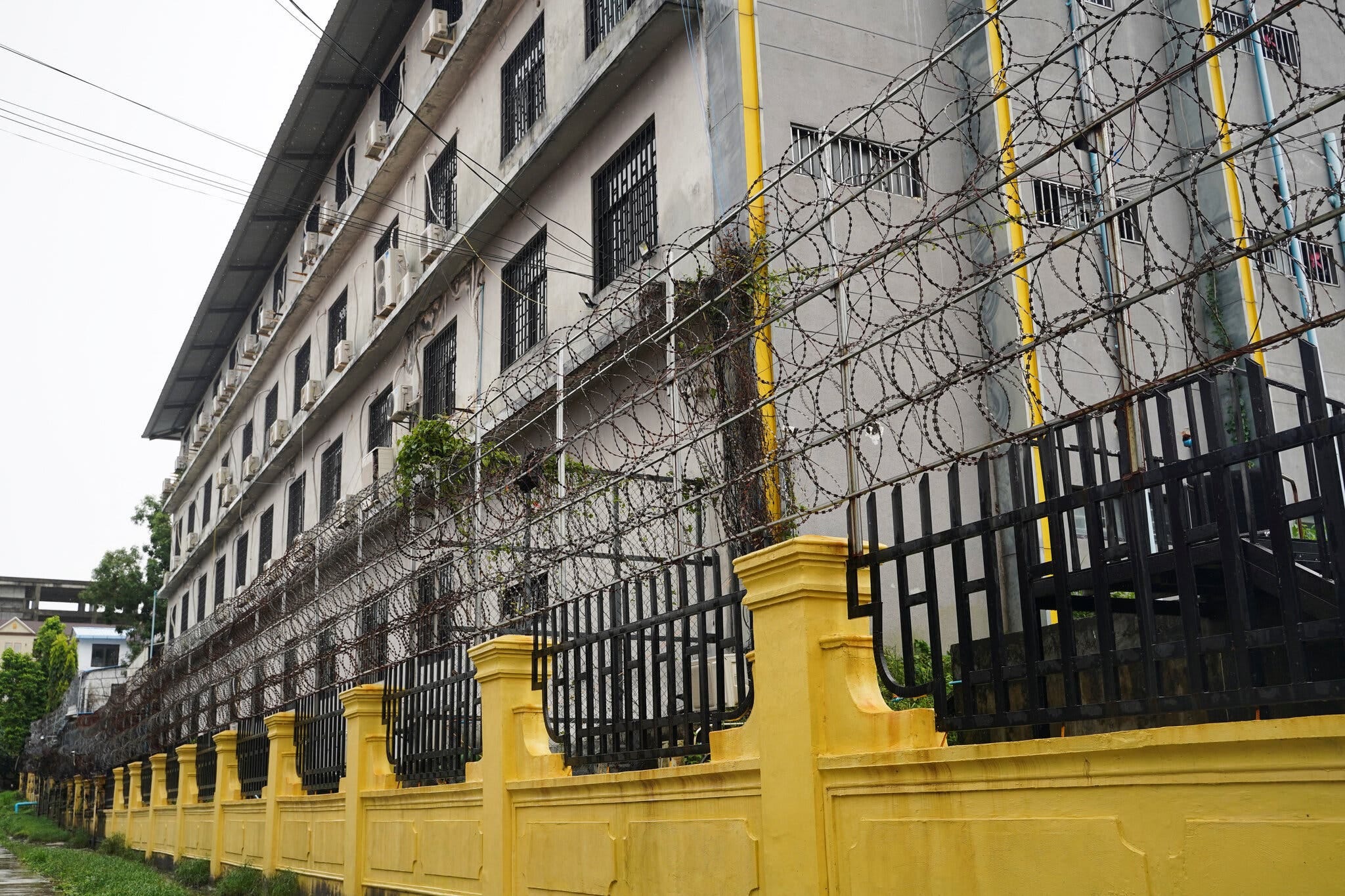
What makes the moment so confronting is not only the scale, but the political economy sustaining it. Many of the compounds now infamous for forced cybercrime sit on land linked to powerful business and political figures. Many of the notorious scam compounds sit on land and in developments tied to politically connected elites—a fusion of criminal capital and landed privilege that converts predation into a durable local rentier economy. International watchdogs and the United States Treasury have documented networks where trafficking, money laundering and elite protection intersect. This convergence has hollowed out enforcement from within, turning sporadic crackdowns into theatre rather than transformation.
The Cambodian government’s recent actions, including high-profile arrests and cooperation with foreign law enforcement, deserve cautious acknowledgement. The detention and extradition of senior figures connected to transnational scam networks in early 2026 signalled that pressure works. Thousands of trafficked workers fleeing compounds shortly afterwards underscored both the scale of the problem and the fragility of the response. Without sustained structural reform, displacement rather than dismantlement remains the most likely outcome.

History offers uncomfortable parallels. Call it what it is: a “digital narco-economy”—an extractive, cross-border criminal market that blends forced labour, scams and financial engineering into a single, metastasising threat. Regions that once tolerated narco-economies or conflict minerals learned, too late, that criminal capital corrodes institutions faster than it builds prosperity. Southeast Asia risks a digital variant of the same trap. Cyber-slavery is not an aberration of development; it is a mutation of it, exploiting uneven growth, weak labour protections and the velocity of unregulated technology.
Comparisons within ASEAN are instructive. Vietnam and Indonesia, facing similar recruitment pipelines, have intensified outbound labour monitoring and bilateral coordination. The Philippines has invested heavily in cybercrime units and victim-centred anti-trafficking frameworks. Thailand, despite its own vulnerabilities, has begun targeting financial enablers rather than only frontline operators. Cambodia’s challenge is therefore not one of capacity alone, but of political will and alignment of incentives.
For ASEAN as a whole, the stakes extend well beyond reputational damage. The region’s long-term ambition rests on digital integration, fintech growth and trusted connectivity with global markets. Scam economies directly undermine these goals. ASEAN responses have diverged: Vietnam has intensified labour-protection and outbound-worker reforms, Thailand is moving from arresting low-level operators to targeting financial enablers, while the Philippines has leaned into victim-centred legislation and survivor services—which makes Cambodia’s choices look political, not inevitable.
Detachment is no longer a luxury for any nation, rich or poor, North or South. What is unfolding in Southeast Asia is a warning shot for the entire international system: when digital crime fuses with human exploitation, borders cease to matter, and vulnerability becomes universal.
Advanced economies absorb the financial losses and institutional corrosion; developing societies bear the human cost and the hollowing out of their futures. For the Global South in particular, the lesson is stark and urgent: growth without governance invites predation, and technological leapfrogging without safeguards risks replacing old forms of exploitation with faster, more invisible ones.
For the global community, the stakes are collective trust and shared security. Allowing cyber-slavery to take root anywhere creates ecosystems of criminal arbitrage that migrate effortlessly, undermining states with weak institutions today and sophisticated economies tomorrow. The choice is no longer between intervention and restraint, but between shared responsibility and a world where exploitation scales faster than law, empathy, and diplomacy can respond.
The response must therefore be collective and layered. Law enforcement cooperation, while necessary, is insufficient on its own. Financial choke points matter more. Targeted sanctions, enhanced scrutiny of correspondent banking, and mandatory transparency around beneficial ownership strike at the architecture that makes these operations profitable. Equally critical is victim protection. Trafficked cyber-workers must be treated as victims of modern slavery, not as criminals to be quietly deported and forgotten.
Besides, policymakers should pair targeted Global-Magnitsky-style designations against kingpins and enablers with mandatory beneficial-ownership registries for real-estate purchases and FATF-aligned KYC rules for crypto on-ramps—a three-part choke that attacks profitability, concealment and conversion.
Technology companies also carry responsibility. Social media platforms remain primary recruitment vectors; cryptocurrency exchanges remain laundering conduits. Regulatory engagement with these actors is no longer optional. Global precedents in counter-terrorist financing demonstrate that when compliance costs rise, criminal adaptation becomes harder and less scalable.
There is, finally, a deeper ethical dimension that diplomacy often avoids. ASEAN’s promise has always rested on the idea that economic growth and human dignity advance together. Cyber-slavery exposes the fragility of that assumption. Growth detached from accountability does not lift societies; it deforms them. The region’s young people, already navigating precarious labour markets, deserve better than an economy that profits from their captivity.
Moments like this test regional identity. ASEAN can choose to treat cyber-slavery as an embarrassing footnote, managed quietly until attention shifts elsewhere. Or it can recognise the crisis as a defining challenge of the digital age, one that demands cooperation, courage and candour. The choice will shape not only Southeast Asia’s moral standing, but its strategic future.
The world is watching, not with hostility, but with expectation. A region that has defied history before can do so again. If Southeast Asia allows predatory digital capital to harden into political advantage, the region will trade a generation’s prosperity for the short-term gains of a criminal elite—and the world will pay the bill.
