


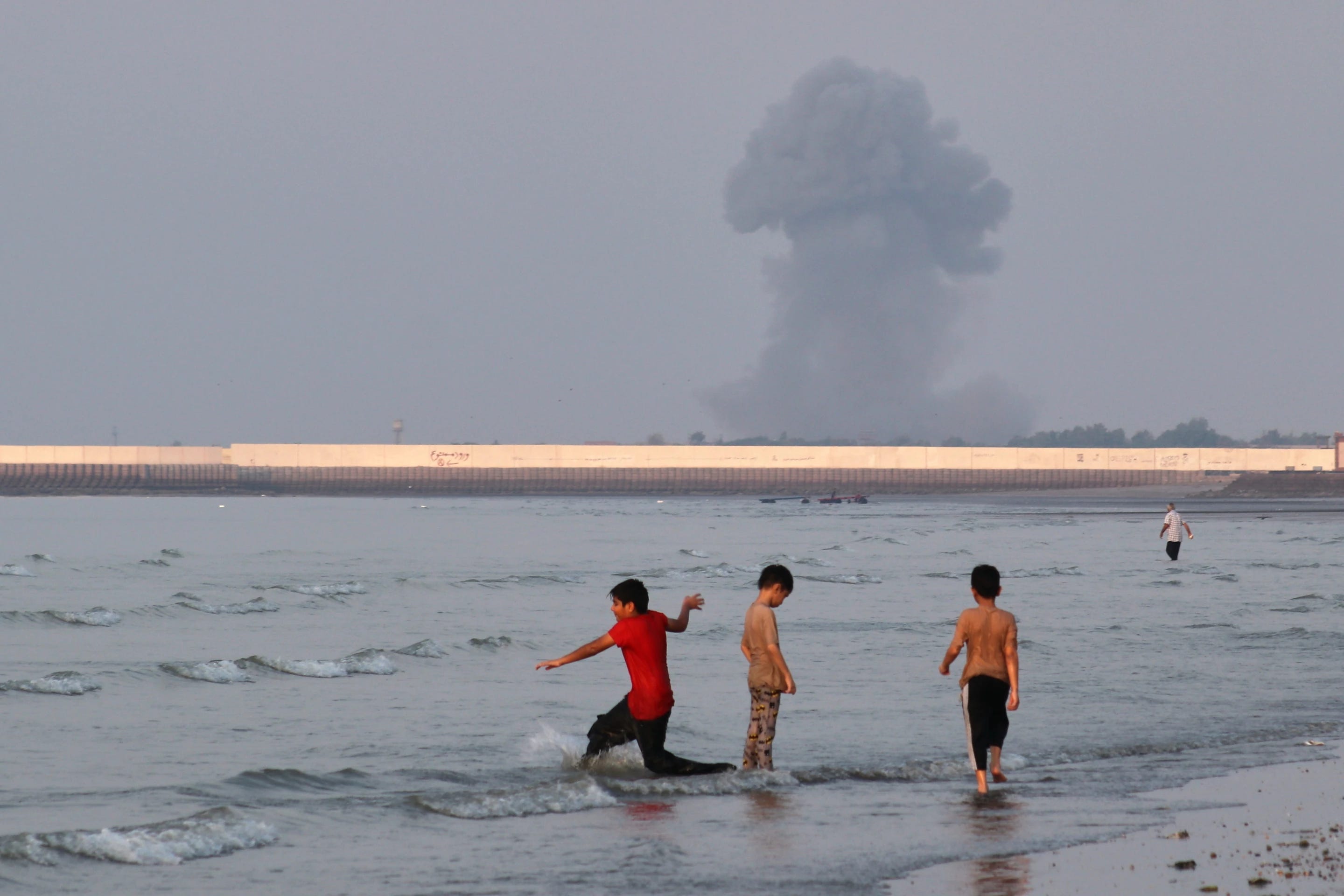
This is not hyperbole. This is the reality of July 2026. The ink on the June Memorandum of Understanding has barely dried, yet the fragile 60-day window for peace has already shattered under the weight of American bombs and Iranian missiles. Nearly 3,500 Iranians have perished since the war erupted—roughly half of them civilians.
Just this week, at least 35 civilians were killed in fresh US airstrikes. And through the carnage, the Strait of Hormuz—a mere 33 kilometres wide at its narrowest point—has become the graveyard of diplomatic credibility.
This is not just another failed deal. This is the clearest proof yet that the world cannot survive another cycle of unilateral US military pressure, retaliatory Iranian escalation, and global economic shock radiating from the Persian Gulf.
Consider the numbers. Before the war, roughly 20 per cent of the world’s oil supply—some 15 to 20 million barrels per day—flowed through the Strait of Hormuz. A fifth of all traded crude oil and natural gas. Today, that artery is effectively severed. Insurance is prohibitively expensive. Seafarers refuse to make the journey. And the International Monetary Fund now warns that the global economy’s cushion against an energy supply shock has shrunk to dangerous levels.
The International Energy Agency projects that a prolonged disruption could push oil prices 30 per cent higher, reigniting inflation across energy-importing economies. The United Nations Conference on Trade and Development cautions that the full economic impact may not be felt until the second half of 2026—once higher costs have been fully absorbed through global value chains.
This is not regional diplomacy any longer. This is the stability of the world’s most critical energy artery hanging by a thread.
And what of the peace? The June 2026 Memorandum of Understanding, brokered through Islamabad, was never built to last. The Guardian’s Patrick Wintour observed that the memorandum was “deliberately ambiguous on the two most complex issues: the ceasefire in Lebanon and the Strait of Hormuz”—a calculated gamble that ambiguity would buy time to build trust.
Instead, it bought mutual recrimination. The US demanded Iran publicly reaffirm that the Strait remained open and stop firing on commercial ships. Iran, in turn, accused Washington of continuous violations and declared the agreement void, insisting it would exercise “full sovereignty over the Strait of Hormuz, no matter the costs.”
The Iranian Foreign Ministry declared: “The US not only violated the agreement but completely dismantled it.” Iranian Parliament Speaker Mohammad Bagher Ghalibaf framed the confrontation as nothing less than an “existential war with America”—a conflict aimed at toppling the Islamic Republic and partitioning the country.
And in Washington? President Trump, having reimposed the naval blockade, escalated strikes on Iranian coastal defences and missile sites, threatening next to target power plants and bridges. The US Central Command described the strikes as designed to “further degrade military capabilities Iranian forces have used to attack commercial shipping.”
This is the destructive logic that fuelled the catastrophes of Iraq, Libya, and Afghanistan. It is the same pattern: unilateral military pressure, retaliatory escalation, and the inevitable collapse of any diplomatic framework that might have offered an escape route.
An analyst captured it acutely when he observed that the Strait of Hormuz has demonstrated itself to be both a chokepoint and a flashpoint—a chokepoint because Iran can inflict massive economic strain on the global economy, a flashpoint because missile and drone strikes have turned the waterway into a battlefield. The distinction matters. A chokepoint can be managed. A flashpoint, without institutional guardrails, becomes a war.
Southeast Asia offers a sobering contrast. The Malacca Strait carries nearly a quarter of global seaborne trade and 45 per cent of total seaborne oil. Yet it is not a flashpoint. Why? Because Indonesia, Malaysia, Singapore, and Thailand jointly manage it through institutionalised cooperation. The Association of Southeast Asian Nations has built a framework of non-interference, dialogue, and shared responsibility.
The Strait of Hormuz has no such architecture. It is governed by nothing more than an anachronistic patchwork of unilateral threats, broken bilateral promises, and a multilateral system structurally incapable of enforcing its own norms.
The solution is not more of the same. It is not another round of “maximum pressure” followed by another collapsed memorandum followed by another wave of strikes. The international community must finally build a multilateral, sovereignty-respecting governance regime for the Strait of Hormuz. The Stimson Centre has documented how Iranian efforts to translate wartime leverage into a lasting political and legal role in governing the strait are threatening to collapse even the fragile agreement with the US.
But the alternative to Iranian control is not American control either. The Trump administration’s own proposal for a multinational consortium—involving Pakistan, Egypt, Turkey, and Saudi Arabia—to manage oil flows through the strait, while deeply flawed, at least acknowledged that unilateralism has failed.
The Davutoglu “Middle Powers Plan” offers another model: a joint maritime security force composed of Indonesia, Malaysia, Pakistan, and Turkey to secure and temporarily administer the waterway. Qatar has been pushing for a multilateral framework involving Iran, Iraq, and Gulf states. Even Iran and Oman have launched a joint committee to discuss the strait’s future governance.
These are not pipe dreams. They are the beginnings of institutional creativity that the moment demands. But creativity requires courage. It requires Washington to abandon the comfortable fiction that American military power can coerce Tehran into submission. It requires Tehran to recognise that permanent control of the strait is not a strategic asset but a strategic liability—a hostage it cannot afford to keep.
And it requires the world’s major importers—China, India, Japan, South Korea, the European Union—to stop free-riding on the US Navy and start building collective institutions that make cooperation materially more rewarding than conflict.
The stakes could not be higher. The IMF has already downgraded global growth forecasts for 2026 to 3 per cent, down from 3.5 per cent in 2025, warning that further escalation could weaken the global economy even more. The Strait of Hormuz carries not just oil but fertiliser, liquefied natural gas, and the hopes of billions who depend on stable energy prices for their daily bread.
The 2026 crisis is a historic opportunity—not because it offers easy answers, but because it has finally made the world’s economic powers feel the burn of dependency intensely enough to overcome their free-riding inertia. Whether they seize it depends on whether they can translate that pain into institutional creativity before the next cycle of violence closes the window for good.
The Strait of Hormuz is burning. The world can no longer afford to look away.
