


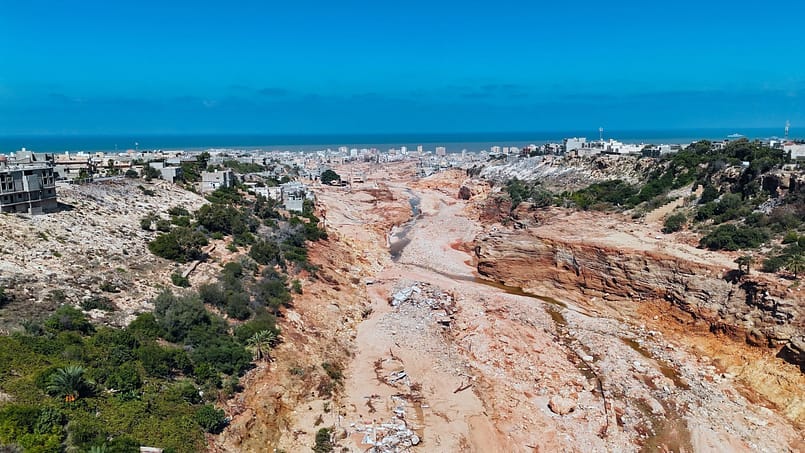
Introduction: Water scarcity is a political crisis
Water scarcity in arid regions of the MENA and the Global South is often presented as a natural or climatic inevitability. This narrative masks a deeper truth: the crisis is political, technical, and systemic.
Research shows that water shortages are not caused by a lack of rainfall alone. They emerge from decades of centralized hydraulic control, industrial agriculture, and development policies that fracture natural water cycles.
The ideology of dams
Large dams have become ideological symbols. They promise mastery, progress, and security. Yet evidence shows that centralized hydraulic infrastructure often worsens scarcity and leads to:
Massive evaporation losses
Reduced downstream availability
Disconnection of upstream landscapes from their hydrological function
In effect, dams consolidate power while creating dependence on technocratic, centralized solutions—a form of hydraulic imperialism.
Studies demonstrate that small, distributed water structures—check dams, infiltration ponds, temporary basins—often deliver more usable water than centralized mega-dams. By slowing water, these systems restore landscape function, recharge aquifers, and support vegetation.
The soil: The largest forgotten reservoir
The greatest reservoir on land is living soil, yet industrial agriculture and extractive development have systematically destroyed its capacity. Two central points:
Healthy soils retain water and release it slowly.
Degraded soils repel rainfall, producing runoff, erosion, and water loss.
This destruction is often misattributed solely to climate change, masking the role of industrial agriculture, deforestation, and centralized water control in creating dependency and vulnerability.
Hydrological collapse and paradox
The coexistence of chronic droughts with sudden floods is not a climate anomaly. It is a broken water cycle caused by decades of technocratic planning and hydraulic ideology.
Water in the MENA and Global South has been captured, controlled, and extracted for political and economic gain, leaving landscapes unable to sustain life or local livelihoods.
Water, sovereignty, and liberation
Water is central to food security, social stability, territorial integrity, and economic sovereignty. Yet governance is fragmented: agriculture, energy, urban planning, environment, and climate are treated separately.
Breaking dependency on centralized infrastructure and restoring local water cycles is not just ecological—it is a struggle for sovereignty.
Toward a new paradigm
The evidence is clear: water security requires restoring hydrological cycles, not just building bigger dams. Key strategies include:
Restoring soil permeability,
Slowing flows and capturing rainfall locally,
Recharging aquifers,
Regenerating ecosystems.
Decentralized, nature-based solutions rebuild landscapes, reduce vulnerability, and challenge the ideology of control that has dominated arid regions for decades.
Conclusion: escaping hydraulic imperialism
Water scarcity is not a natural law. It is the product of decades of centralized control, technocratic ideology, and industrial extraction.
Restoring hydrological cycles is a path to landscape sovereignty, resilience, and autonomy. The question is no longer how much water can be stored in dams, but how long water can remain alive in the territories themselves, sustaining life and human dignity.

Thanks so much for that summary Mr Benamara. It is helpful and socially responsible: I love it.