


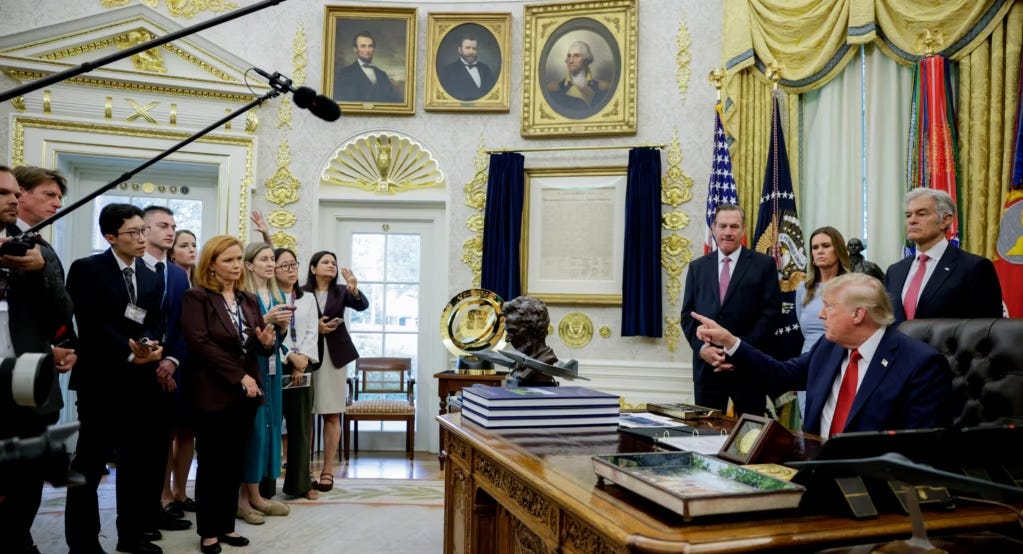
US President Donald Trump signed into law the Sanctioning Russia and Iran Act on Friday, 18 September. The law, if implemented, is expected to cause new disruptions to the global economy, already under strain due to the US-Israeli war on Iran.
The US law is named after Lindsey O. Graham, a hawkish Republican senator who died in July. He was the initiator and one of its ardent advocates.
The US House of Representatives adopted the bill in a bipartisan vote, with 262 voting in favour and 159 voting against it, on 17 September. The Senate had already approved the bill in August with an overwhelming majority.
It imposes new sanctions on Russia and its high officials, including President Vladimir Putin. It targets the so-called “shadow fleet” of oil tankers allegedly used by Russia to evade the US sanctions and imposes a 500% tariff on goods imported from the country.
However, the most significant aspect of the law is related to the discretionary powers it gives to Trump. According to the law, Trump will have the power to impose tariffs of up to 100% on goods imported from the top buyers of Russian oil and gas or its military supplies.
