


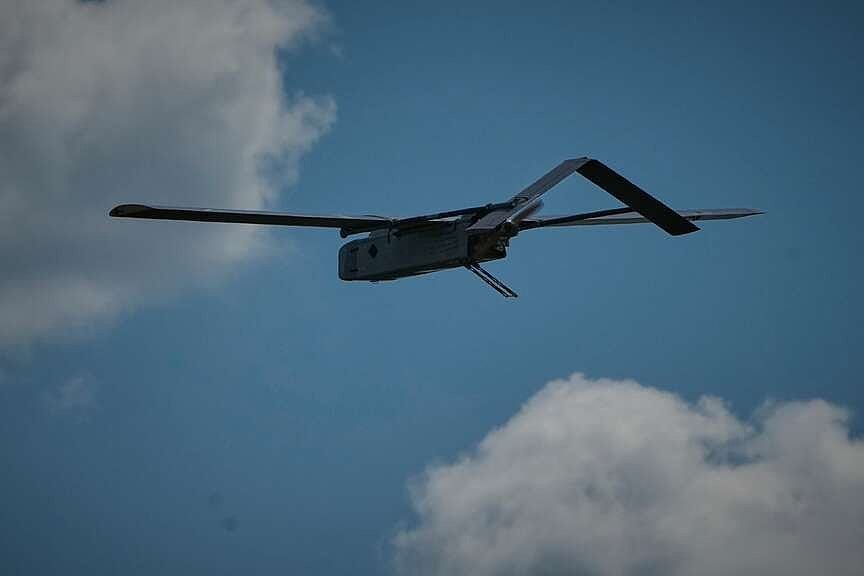
UN Secretary-General Antonio Guterres and President of the International Committee of the Red Cross (ICRC) Mirjana Spoljaric repeated their joint call for urgent prohibitions and restrictions on autonomous weapons systems.
“We are now dangerously close to crossing a moral red line: the autonomous targeting of humans by machines,” Guterres said in his post on X, asserting, “Innovation must serve humanity—not endanger it.”
Noting the growing use of drones and other automated weapons in the ongoing and recent conflicts such as the wars in Ukraine, the Israeli genocide in Gaza, the US-Israeli war on Iran, and the war in Sudan, the UN and other agencies have insisted on laying down norms on their use, as existing laws and conventions often fail to do so.
The absence of a firm and clear understanding of the automated weapons and a legally binding instrument on their use is making it difficult to establish accountability for a lethal act. Experts say this problem could increase manyfold in the coming period as new innovations are increasingly incorporated by most countries” armed forces.
Though existing international laws and conventions prohibit targeting civilians and civilian infrastructure, when an automated weapon system with limited human control is involved, the restrictions become hazy.
Even if all the precautions are taken by an armed force while deploying such technology in the war and conflict scenario, the chances that AI-enabled automatic weapons kill innocent people and fail to differentiate between a combatant and a non-combatant are highly likely and could become a recurring problem, several experts told UN News.
No machines killing humans
A report in UN News said that activists have been calling for legal prohibitions on “all machines capable of taking lives without human involvement during wars” and other conflict scenarios while underlining that humans must retain life and death decisions.
“In the current security landscape, setting clear international redlines will benefit all states,” Guterres and Spoljaric had said during their first joint call in 2023.
“Autonomous weapons systems—generally understood as weapons systems that select targets and apply force without human intervention—pose serious humanitarian, legal, ethical and security concerns,” they had pointed out.
The first discussion on automated weapons began in 2014. The 2023 joint appeal for a legally binding instrument had 2026 as the deadline.
Their joint call for the prohibitions on automated weapons was renewed as states are about to meet to discuss rules related to AI-assisted semi-automatic weapons next week in Geneva.
This meeting is in preparation for the Seventh Review Conference on the Convention on Certain Conventional Weapons (CCW) scheduled to be held in Geneva in November.
Countries that deploy such weapons in large numbers, such as the US and Russia, have opposed the need for specific laws.
Both Guterres and Spoljaric asked the states to “move their incremental discussion towards decisive action,” as most of the points about the use of AI in wars have already been discussed in the UN General Assembly and CCW’s Group of Government Experts in the past.
Their goal is for all states to agree on certain parameters concerning the use of automated weapons, such as “limiting where, when and for how long they are used, the types of targets they strike and the scale of force used, as well as ensuring the ability for effective human supervision and timely intervention and deactivation.”
