


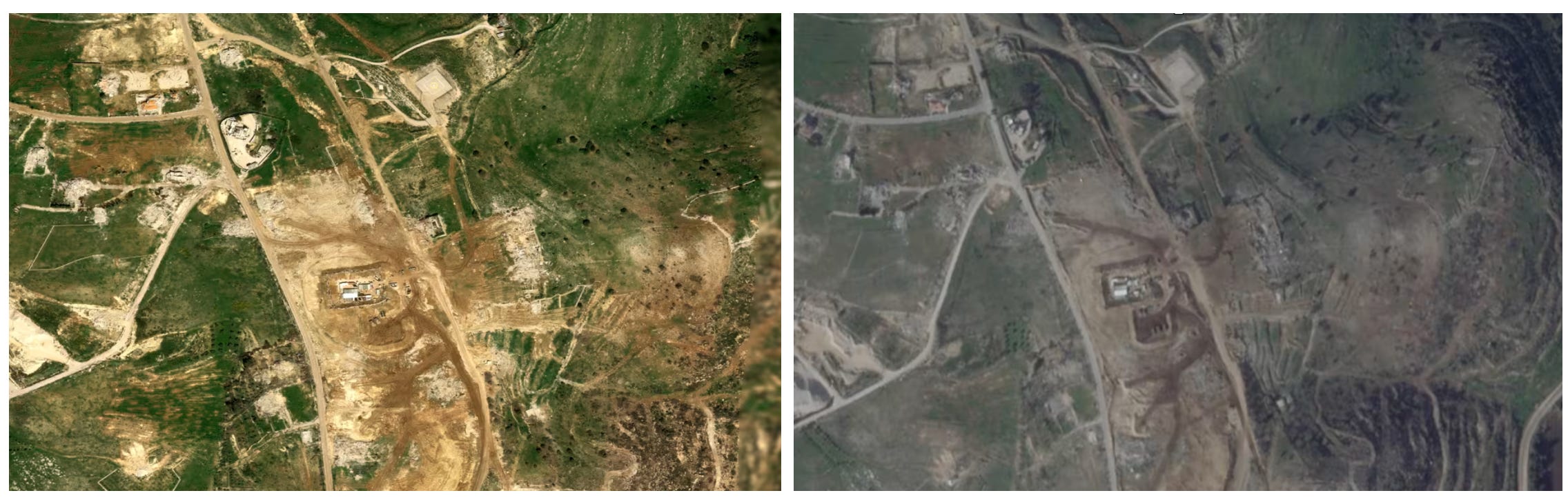
A ceasefire, in theory, is meant to quieten the guns. In southern Lebanon, it has instead exposed something far more unsettling: the persistence of force beneath the veneer of restraint. Even as diplomatic language gestures toward de-escalation, the ground continues to shift—sometimes literally—under the feet of civilians whose homes are reduced to dust not in the heat of battle, but in its supposed aftermath.
Since early March 2026, more than 1,400 buildings have been deliberately demolished across southern Lebanon, verified through satellite imagery and open-source investigations. Entire villages have been flattened in operations that bear the hallmarks not of urgent combat, but of methodical engineering. Explosives are placed, charges are set, and neighbourhoods collapse in orchestrated sequence. This is not the fog of war; it is its architecture.
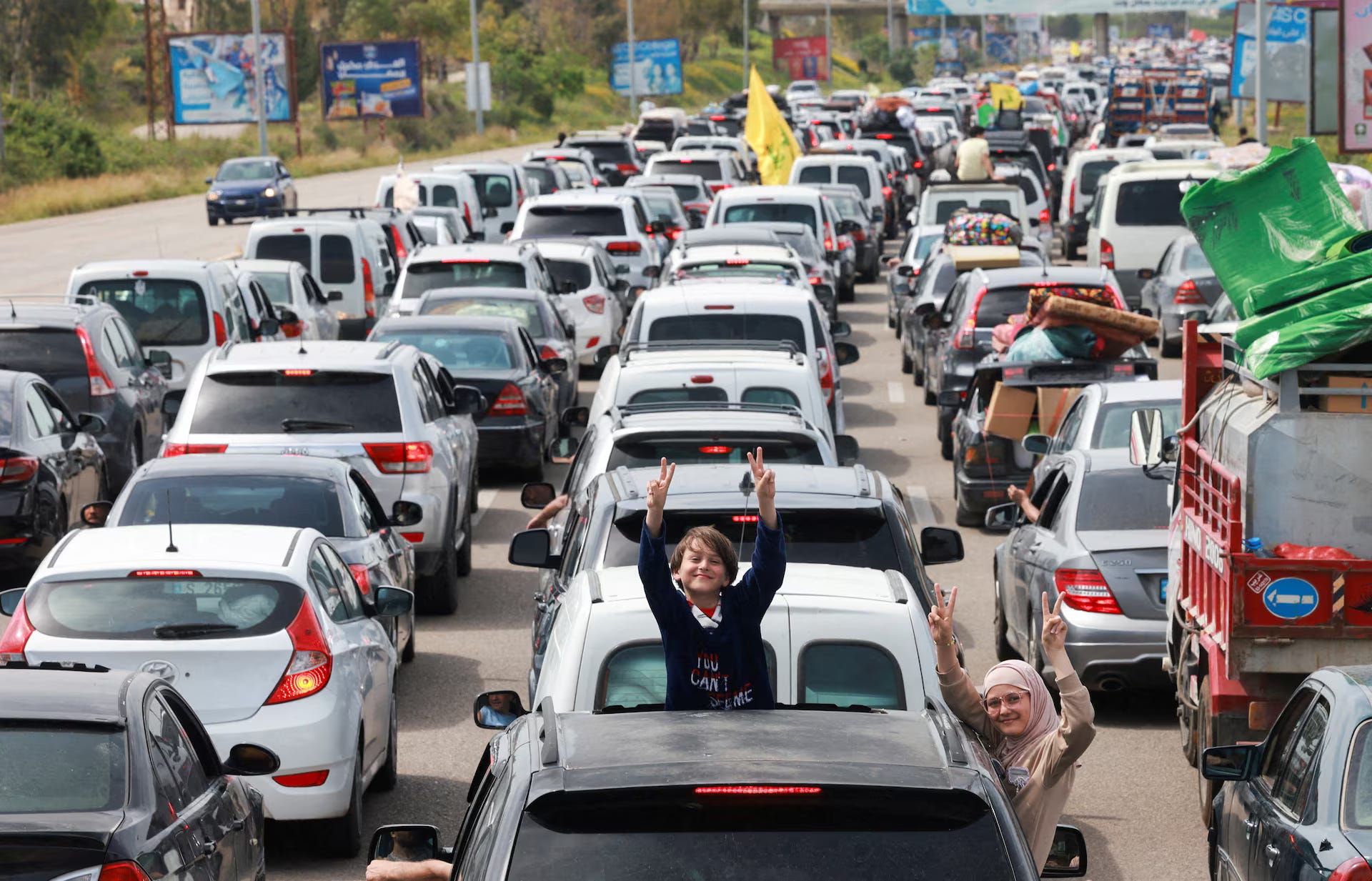
The numbers alone strain comprehension. Over one million people displaced, representing roughly 14 per cent of Lebanon's territory, have been emptied of life in mere weeks. The United Nations warns of a humanitarian system on the brink: fuel dwindling, shelters overwhelmed, and aid corridors severed. Yet amid this unfolding catastrophe, a ceasefire—announced with cautious optimism—has done little to arrest the deeper logic driving the conflict.
Why does Israel continue to strike Lebanon, even as ceasefire frameworks emerge?
The answer lies in a strategic doctrine that views cessation not as an endpoint, but as a tactical pause within a broader campaign. Israeli leadership has been unusually candid. A declared intention to establish a “security buffer zone” extending to the Litani River, coupled with vows to destroy “all houses” in border villages, signals an ambition that transcends immediate retaliation. This is about reshaping geography to produce security—a doctrine reminiscent of past buffer zones, yet far more expansive in execution.
From a realist perspective, the logic is brutally coherent. From a more critical vantage point, this is less about deterrence and more about territorial ambition cloaked in security language, the same language that already flattened Gaza. Hezbollah's rocket fire becomes the justification, but the pattern suggests something deeper: a gradual reshaping of land and demography under the cover of necessity. In this framing, the ceasefire is not a restraint but a strategic pause, where continued strikes help entrench new realities on the ground—ones far easier to create than to justify.
But realism, when untempered, has consequences that ripple far beyond the battlefield. International humanitarian law draws a sharp line between military necessity and collective punishment.
The destruction of civilian property is permissible only under “imperative military necessity,” a threshold that legal experts argue is rarely met by blanket demolition policies. When entire villages are levelled after being secured, the justification becomes increasingly tenuous. Human Rights Watch and Amnesty International have both warned that such patterns may constitute war crimes, particularly when linked to forced displacement and the prevention of civilian return.
Even within Israel's own legal circles, concerns have surfaced. Policies that appear to engineer long-term population displacement risk crossing from tactical necessity into unlawful intent. The distinction matters—not only for legal accountability, but for the integrity of the international system itself. If the rules governing war are seen as optional, selectively applied by those with sufficient power, their deterrent value erodes for all.
The ceasefire, as currently structured, reflects this ambiguity. Brokered with the involvement of the United States, it reportedly allows Israel to retain the “right to take any necessary measures” in self-defence. Such language, while diplomatically expedient, creates a permissive environment in which military operations can continue under the banner of compliance. For Lebanon, and for Hezbollah, this raises an existential question: what does a ceasefire mean if the destruction does not stop?
Even the ceasefire itself carries the imprint of great-power choreography, with reporting indicating it was driven less by conditions on the ground than by Washington's urgency to contain a widening confrontation with Iran—casting the truce not as a resolution, but as a strategic pause within a far larger and unresolved war.
Hezbollah's own position underscores the deadlock. It has signalled conditional adherence to the ceasefire, while insisting that Israeli forces withdraw to pre-March positions. The logic is reciprocal: as long as occupation persists, resistance remains justified. This is the classic security dilemma, rendered in human terms. Each side interprets its actions as defensive, and the other's as aggressive. Each escalation is framed as a necessity, each restraint as a vulnerability.
Hezbollah's position lays bare the entrenched deadlock. Its conditional acceptance of the ceasefire hinges on Israeli withdrawal to pre-March lines, framing resistance not as escalation but as an obligation under continued occupation.
This is the security dilemma in its rawest human form—each side reading defence in its own actions and aggression in the other's. Yet for Hezbollah, these exchanges are far from reactive; they reflect a long-honed doctrine of “deterrence equations,” where every Israeli move is met with a calibrated response, not simply to retaliate but to sustain a fragile balance of fear.
Beyond the battlefield, the tremors are already global. Oil markets have begun to price in the instability, with volatility across Brent and WTI echoing earlier geopolitical shocks—from the 1973 embargo to the 2006 Lebanon war—moments when energy ceased to be a commodity and became a measure of fracture. In this light, Lebanon is no longer just a theatre of war, but a strategic hinge where local devastation and global consequence collide.
Yet beneath this strategic symmetry lies a profound asymmetry of impact. It is Lebanese civilians—families fleeing on foot, communities erased from maps—who bear the immediate cost. The International Committee of the Red Cross has described the situation as “heartbreaking,” a word that feels almost inadequate against the scale of suffering. Bridges destroyed, roads severed, entire regions isolated: these are not incidental damages, but systemic disruptions that reshape daily life long after the guns fall silent.
There is also a broader geopolitical dimension that cannot be ignored. This conflict is entangled with a wider confrontation involving Iran and the United States, with global economic implications. Oil markets have already reacted, and fears of recession loom if instability spreads. In this context, Lebanon becomes both a battlefield and a bargaining chip—a place where local devastation intersects with global strategy.
For the architects of global security spanning Washington to Riyadh, Brussels to Jakarta, this moment lands with disquieting clarity: the ceasefire is no longer a boundary between war and peace, but a blurred instrument within war itself. When strikes persist under the legal and rhetorical shelter of restraint, diplomacy begins to hollow out from within—its language preserved, its substance quietly repurposed.
For the GCC, navigating fragile regional equilibria, and for the OIC, tasked with upholding collective political conscience, the message is stark and unsettling: agreements that tolerate calibrated violence risk legitimising it. In such a landscape, the rules-based order does not collapse dramatically—it erodes, clause by clause, exception by exception, until restraint itself becomes negotiable.
Across Arab and global councils alike, a sharper realisation is taking hold: this is no longer about Lebanon alone, but about the future architecture of conflict management. If ceasefires can be engineered to absorb continued force, they cease to function as diplomatic endpoints and instead become strategic cover—pauses that entrench advantage rather than resolve grievance. For Europe, already confronting the strain of contested norms, and for Indo-Pacific powers reading these signals with quiet urgency, the implications travel far.
What is being tested is not just compliance, but credibility—whether international law remains a constraint or has become a vocabulary through which power justifies itself. In that sense, the hills of southern Lebanon are no longer peripheral; they are instructive, even determinative, in shaping how the next conflict, elsewhere, will be fought—and defended.
The deeper question is not simply why Israel continues to strike, but what this reveals about the current state of international order. Is security to be pursued through the reshaping of territory and the displacement of populations? Or can a framework be sustained in which even the most acute threats are addressed within the bounds of law and restraint?
There are no easy answers. Israel's security concerns are real and immediate. Hezbollah's capabilities are not hypothetical. But the method of response matters—not only for those directly affected, but for the precedents it sets. History offers stark reminders of what happens when strategic imperatives override humanitarian constraints. From Bosnia to Chechnya, the language of necessity has often accompanied actions later judged with regret.
Threaded through this crisis, yet too often overlooked in policy calculus, is the sheer weight and reach of Lebanon's global diaspora—a community of roughly 15.4 million people, more than triple the population within Lebanon itself. From São Paulo to Sydney, from Abidjan to Montreal, this dispersed nation forms an informal but potent extension of Lebanese sovereignty, one that watches the slow unravelling of the south not as distant observers but as stakeholders bound by memory, remittance, and political voice.
Brazil alone hosts up to 10 million people of Lebanese descent, with millions more across Argentina, Colombia, and Mexico, while significant communities in the United States, France, Canada and Australia quietly shape political discourse in capitals that matter. In moments like this, fragile ceasefire—where the language of de-escalation coexists uneasily with continued strikes—the diaspora becomes more than a demographic fact; it is a diplomatic force multiplier.
Its capacity to mobilise humanitarian aid, influence legislative agendas, and recalibrate narratives in global media ecosystems introduces a transnational dimension to what might otherwise be dismissed as a contained border conflict.
For policymakers, ignoring this network is no longer tenable: the Lebanese question does not stop at the Litani River, nor even at Lebanon's borders—it reverberates across continents, carried by a diaspora whose scale, integration, and political access make it one of the most consequential yet under-leveraged actors in shaping both accountability and the prospects for a durable peace.
In southern Lebanon, the dust has not yet settled—literally or figuratively. A ceasefire exists, but it is fragile, contested, and incomplete. The continued strikes are not an anomaly; they are a feature of a conflict in which peace is negotiated in theory but undermined in practice.
What remains is a test—not just for the parties involved, but for the international community. Whether the rules that govern war can still command respect. Whether diplomacy can move beyond managing violence to genuinely ending it. And whether, in a region long defined by cycles of conflict, there is still space to imagine a different trajectory.
For now, the sound of demolition charges echoes louder than the promises of peace.

Israel needs to be dismantled. The SETTLERS CAN GO HOME.