


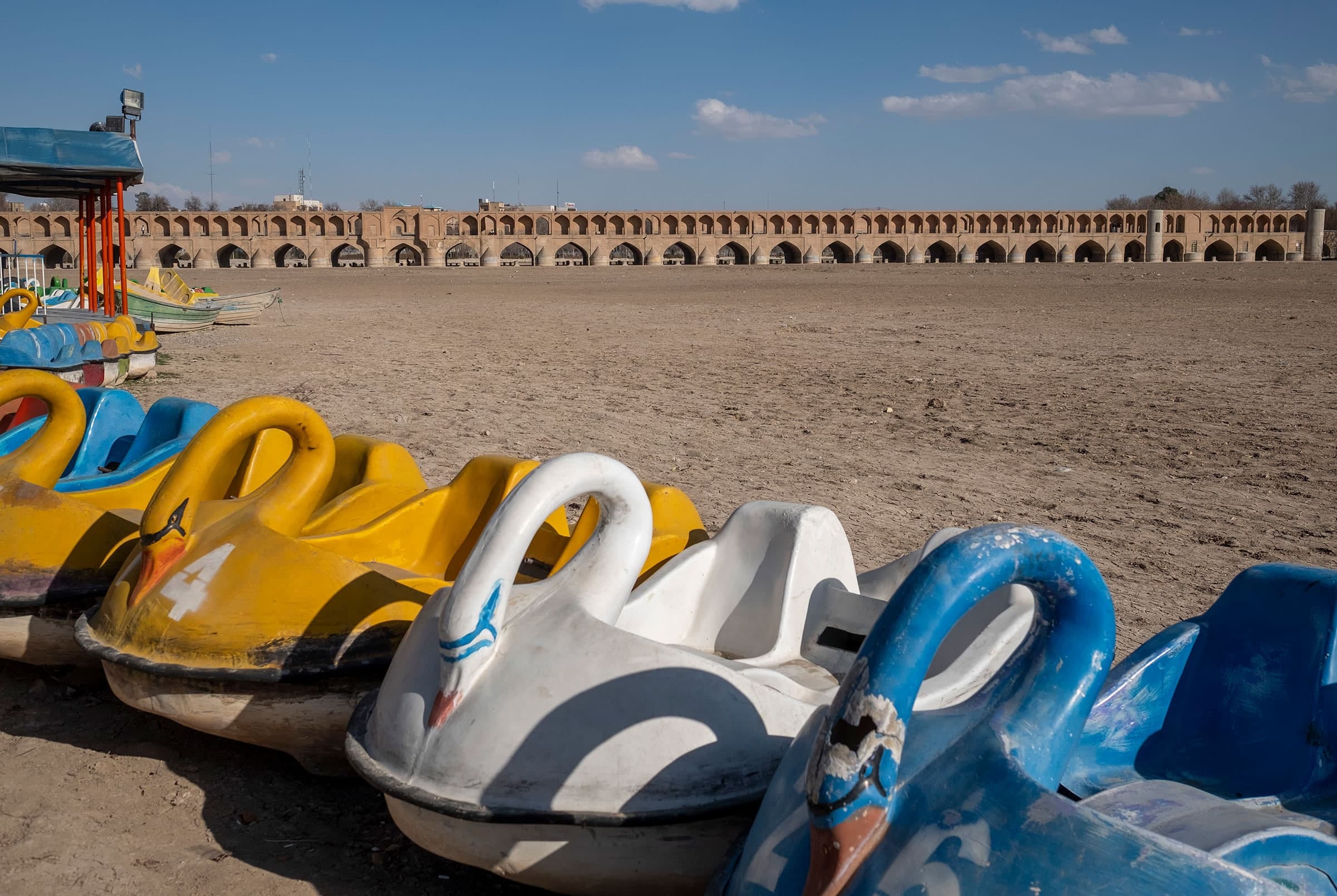
In November 2025, Iranian President Massoud Pezeshkian issued a warning that should have made global headlines: Tehran, a metropolis of 15 million people, might have to face rationing and partial evacuation. Not because of missiles. Not because of riots. Because the water is gone.
This was not a specialist’s hypothesis or a distant catastrophic scenario. It was, in his own words, a “necessity” dictated by the unprecedented collapse of water reserves and chronic drought. The reservoirs supplying the capital have fallen to 12 percent of their capacity. Groundwater tables, pumped relentlessly for decades, are subsiding by up to 30 centimeters per year, cracking buildings and roads as the city literally sinks into itself.
The summer of 2024 had already sounded the alarm: daily water cuts, thermometers exceeding 40 degrees Celsius, millions of Iranians suffocating in punishing heat while taps remained dry. Desperate, the president offered a one million dollar reward to anyone proposing a viable solution. To date, no one has cashed that check.
While international attention remains fixed on geopolitical tensions, Israeli strikes against Iranian interests, regime change threats from Washington, and nuclear standoffs, a silent but fundamental factor has been undermining the country from within for years. More than sanctions, which strangle the economy. More than theocracy, which many contest. More than bombardments, always feared. The greatest existential crisis facing Iran has a technical name that hydrologists have been repeating in vain for a decade: hydrological bankruptcy.
A bankruptcy that cannot be negotiated at the International Monetary Fund. A bankruptcy that cannot be resolved by a change of flag or regime. A bankruptcy inscribed in the soil, in the subsoil, in every drop of an aquifer that decades of mismanagement, questionable technocratic choices, and implacable American sanctions have emptied faster than nature can refill it.
Shared Responsibility in a Complex Context
It would be incomplete to attribute this catastrophe solely to internal mismanagement without naming those who, from the outside, have deliberately asphyxiated the Iranian people. The United States, through a sanctions regime among the harshest ever imposed on a country, bears an overwhelming responsibility in this water tragedy. These sanctions have methodically hindered access to modern water management technologies, including advanced irrigation, desalination, and recycling systems that countries like the occupying power have been able to develop freely. They have prevented the import of spare parts for aging infrastructure, condemning treatment plants and distribution networks to accelerated degradation. They have isolated Iranian engineers and hydrologists from international scientific cooperation that could have been beneficial. They have blocked access to international financing that would have allowed massive investments in resource preservation. They have turned every modernization attempt into an obstacle course, discouraging initiatives and paralyzing public action.
Meanwhile, in Washington, successive administrations, Democrat and Republican alike, have maintained and even reinforced this stranglehold, using the suffering of the Iranian people as a bargaining chip in matters having nothing to do with water or the survival of populations.
This policy of siege is part of a long American tradition of proxy wars and state mega-lies. The 2003 invasion of Iraq remains the unsurpassed model in this regard: weapons of mass destruction brandished as justification by the Bush administration, presented as an existential threat to the world, which turned out to be nothing but a fantasy. United Nations inspectors on the ground affirmed they had found no evidence. But Washington had decided to strike. A war declared illegal by UN Secretary-General Kofi Annan himself as not in conformity with the UN Charter.
The human and financial toll is overwhelming. On the American side, more than 4,400 soldiers killed, 32,000 wounded. On the Iraqi side, between 110,000 and over one million dead, not counting the hundreds of thousands of victims of sectarian violence and chronic instability that followed the occupation. According to Brown University’s Costs of War project, the total cost of wars in Iraq, Afghanistan, and Pakistan exceeds 3.2 trillion dollars. For Iraq alone, the Defense Department directly spent more than 757 billion dollars, and some updated estimates including veterans’ care exceed 2 trillion dollars. Between 2023 and 2025, more than 30 billion dollars of American taxpayers’ money was poured into supporting the de facto occupying state and its regional wars.
Today, the same pattern repeats with Iran. American intelligence itself confirms that Tehran suspended its military nuclear program in 2003. But facts become unimportant when the goal is regime change.
Iran is dying of thirst before it even dies under bombs. This agony bears a triple signature. That of Iranian leaders who made questionable choices in managing their resources, who mismanaged what they had. That of the United States, which through an unprecedented economic siege deprived an entire people of the means to face drought, preventing Iranians from repairing, modernizing, and innovating. And that of a system where the American taxpayer pays with blood or wallet for wars serving the geostrategic interests of a third-party foreign entity, while their own fellow citizens struggle to pay their bills, rent, or medical care, never having been consulted.
The victims are always the same: millions of inhabitants watching their taps run dry, unable to understand why geopolitics condemns them to thirst.
The Purpose of This Text
This observation reveals a truth deeper than any emergency measure: political crises do not replace destroyed hydrological cycles. Recent history reminds us that a change of flag does not repair an ecological collapse.
This study offers a dual demonstration. First, Iran has squandered its ancestral hydraulic genius, a millennial heritage of qanats and techniques adapted to arid environments, through mismanagement and questionable choices aggravated by decades of sanctions. Its populations will always suffer from water scarcity, regardless of the regime in power. Second, meanwhile, other regional actors have developed remarkable water strategies, combining the capture of transboundary resources and advanced technological development including desalination, recycling, and precision irrigation. Water has thus become, for some, a tool of power and diplomatic pressure.
A lesson emerges: military or political solutions do not fill groundwater tables. Without water, there is no agriculture, no industry, no lasting social stability. A country’s security is not played out only on battlefields, but also in how it preserves and manages its vital resources.
Part One: Iran’s Water Crisis
Tehran: A Capital Under Hydraulic Pressure
Iran’s water situation has now exceeded the framework of a simple seasonal drought. Available data outline a structural crisis with multiple dimensions. Ninety-seven percent of Iranian territory now faces severe water stress. The capital Tehran depends on more than 80 percent on its groundwater tables for supply. Intensive aquifer exploitation causes soil subsidence reaching 30 centimeters per year in some urban areas, while groundwater levels drop by up to one meter annually. The country’s emblematic ecosystems are collapsing. Lake Urmia has lost more than 90 percent of its surface. The Hamoun wetland has transformed into salt marshes. The Zayandeh Rud, Isfahan’s historic river, is regularly dry.
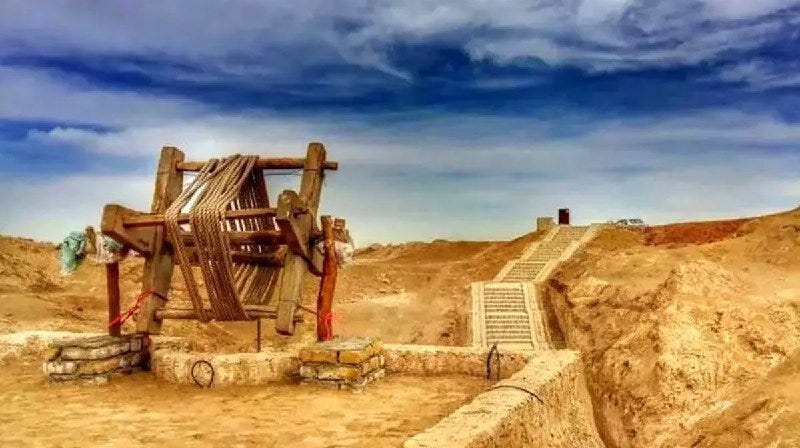
The Iranian capital illustrates a national phenomenon: water is extracted faster than natural mechanisms can renew it. Once, more than 500 qanats supplied Tehran. Today, most of these ancestral structures are collapsed, polluted, or dry.
A Crisis with Deep Roots
Iran’s water crisis did not begin yesterday. It has built up over several decades through development choices that have profoundly transformed the country’s relationship with its water resources. While climate change aggravates the situation today, the roots of the problem go back much further. As a former senior official of Iran’s Department of Environment notes, Iran’s dramatic water security problems are rooted in decades of disjointed planning and managerial myopia.
The Dam Policy
To meet the growing needs of an expanding population and the country’s industrial ambitions, Iran embarked on a vast dam construction program starting in the 1950s. According to an international water specialist, Iran was one of the world’s top three dam builders. Today, the country has more than 600 dams, often built on rivers with modest flow.
This policy was not unique to Iran. In the Cold War context, the great powers encouraged this type of megaproject as symbols of modernity and technical mastery. The United States and the Soviet Union offered developing countries loans and technical assistance to build dams and hydroelectric plants.
As early as 1949, the Shah of Iran, Mohammad Reza Pahlavi, had been impressed by the Hoover Dam during a visit to the United States. This fascination with large infrastructure translated into an ambitious program supported by American technical aid. President Truman’s Point Four Program sent American engineers to train Iranian specialists, introducing deep drilling and pumping techniques that would allow tapping aquifers on an unprecedented scale. Simultaneously, water-intensive industries like steelmaking were placed in the driest central regions, making them dependent on water transfers from other hydrological basins.
Intensive Groundwater Exploitation
Over the past four decades, more than one million wells equipped with powerful pumps have been dug across the country. The goal of food self-sufficiency, consistently pursued by all successive governments, has led to intensive pumping of groundwater.
The figures are telling. According to expert estimates, in twenty years Iran has lost more than 210 cubic kilometers of stored water in its aquifers. A recent international study revealed that no fewer than 32 of the world’s 50 most overexploited aquifers are in Iran.
Agriculture is the main water user, accounting for about 90 percent of total consumption. But as wells multiply, their yields decrease. Ecology researchers have found that the number of extraction points has doubled since 2000, but the amount of water brought to the surface has dropped by 18 percent. Simultaneously, natural aquifer recharge has fallen by 35 percent since 2002, partly due to dams and withdrawals that dry up rivers and downstream wetlands.
Water Governance After 1979
After the 1979 revolution, the young Islamic Republic inherited an already strained water system. The new authorities, while denouncing certain aspects of imperial-era modernization, faced the same challenges as their predecessors: feeding a rapidly growing population, ensuring food independence, and developing infrastructure in a country at war.
Under pressure from the conflict with Iraq from 1980 to 1988 and the self-sufficiency imperative promoted by the leaders of the time, the number of wells increased considerably. The priority was agricultural production, without the long-term consequences on groundwater tables being fully measured.
Over the decades, a particular configuration emerged in the water sector, closely associating several major actors: engineering companies linked to public institutions, state corporations in charge of planning and managing water resources, and specialized consulting firms.
This concentration of expertise and contracts led to a certain uniformity in technical choices: priority to large dams, inter-basin water transfers, and large-scale projects. Alternative solutions, like rehabilitating qanats or recharging aquifers with floodwaters, were relatively neglected.
Missed Opportunities
In this context, voices arose proposing alternatives. An Iranian hydrologist, a pioneer of aquifer recharge techniques using floodwaters, saw his recommendations largely ignored. Yet these simple, low-cost methods could have retained part of the precipitation that now flows to the sea or evaporates.
Iran thus loses at least one-fifth of its precipitation to flash floods. This researcher’s work suggested that up to 80 percent of these floodwaters could be redirected to aquifers. But these approaches, less spectacular than large dams, did not receive the same support.
The Relative Abandonment of Qanats
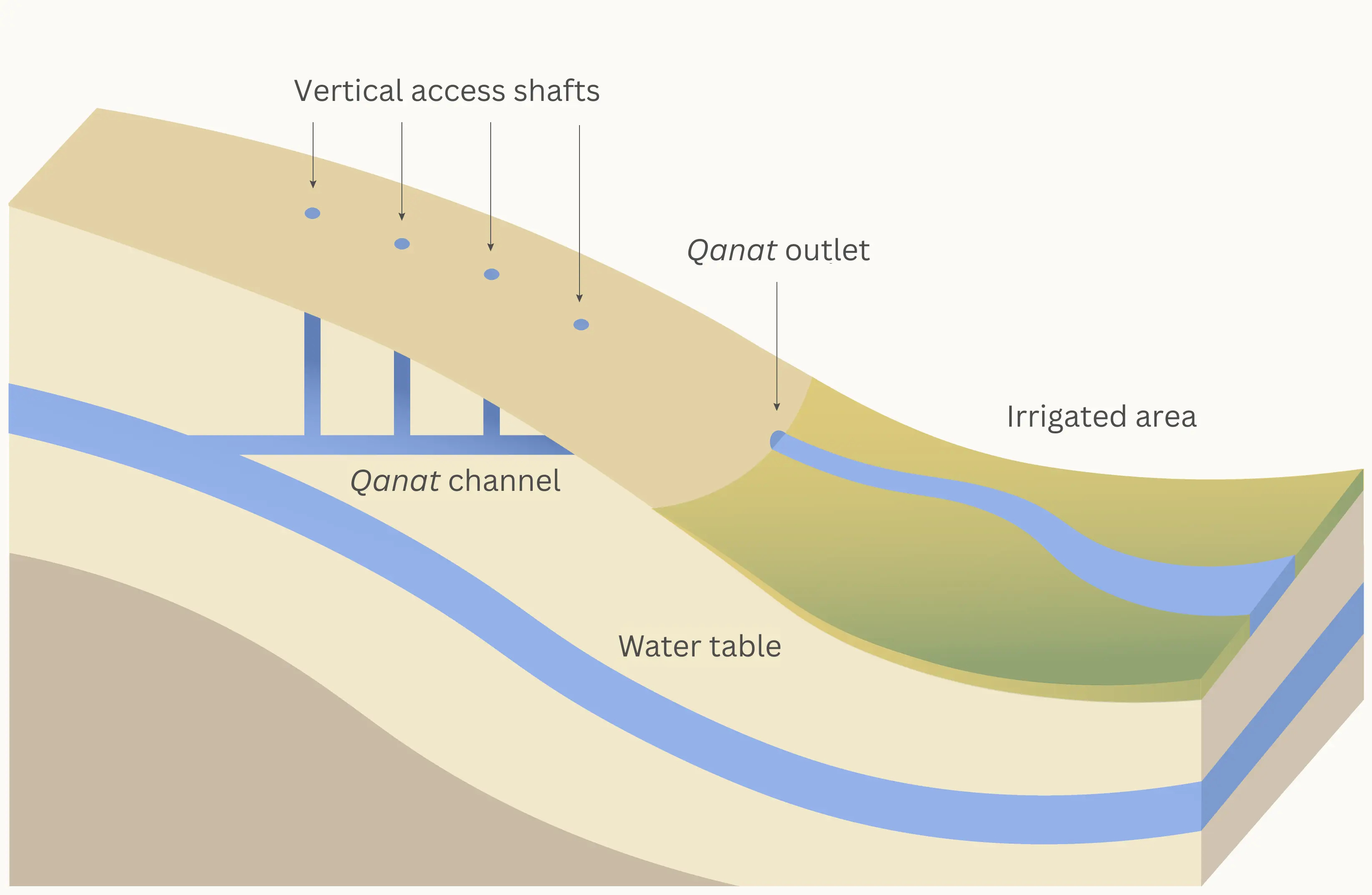
Iran is the birthplace of qanats, those 2,500-year-old gravity tunnels that capture water sustainably. The country still has about 70,000 of them, some, like the Gonabad network, extending over 30 kilometers.
Unlike pump-equipped wells, qanats only draw water naturally replenished by precipitation. Their durability was such that they were called eternal springs. But Iranian hydrologists estimate that over the last half-century, about half of these structures have been deprived of water by the drop in water tables due to intensive pumping.
Specialists have observed that groundwater depletion coincided with the gradual replacement of Persian qanats by deep wells. In their homeland, these systems are abandoned, while other countries like Oman strive to preserve and restore them.
As the director of the Kerman Qanat Center laments: History will never forgive us what deep wells have done to our qanats.
Partially Irreversible Damage
Hydrologists warn that much of the damage to aquifers is permanent. As they dry out, the pores that held water in the subsoil collapse, permanently reducing storage capacity.
On the surface, this phenomenon causes soil subsidence. According to one expert, this compaction now affects more than 3.5 percent of Iranian territory. Historic cities like Isfahan and Yazd see their buildings crack. Geologists speak of a silent earthquake.
Once significant subsidence occurs, much of the storage capacity is permanently lost, explains the international specialist already cited.
The Challenge of New Projects
Despite this alarming observation, the logic of large projects continues to prevail in certain decision-making circles. The latest example is a complex and costly scheme to desalinate water from the Gulf, pumped nearly 4,000 kilometers through pipelines to the central provinces. Inaugurated to supply Isfahan, this project provides water too expensive for agriculture, benefiting only heavy industry.
Many hydrologists believe the investments would have been more useful if devoted to repairing qanats, recharging aquifers, and improving agricultural efficiency. But these solutions, less politically visible, struggle to impose themselves against the tradition of megaprojects.
Part Two: The Water Policy of the De Facto Occupying State
A Regional Contrast in Water Management
While Iran faces growing water challenges, the de facto occupying state has developed over decades a remarkably efficient water policy technologically. This technical success, internationally acclaimed, nonetheless rests on strategic choices and territorial realities that deserve examination as a whole.
Historical Foundations
From the earliest formulations of the Zionist project, the water question occupied a central place. At the 1919 Paris Peace Conference, the Zionist Organization presented a document titled Outline of Program for the Jewish Resettlement of Palestine in Accordance with the Balfour Declaration, drafted by a committee including Chaim Weizmann and Nahum Sokolow. This text defined borders deemed essential for the economic foundations of the future state, already including southern Lebanon with the Litani River, the Golan, and the Jordan Valley.
In his correspondence with Lord Balfour, Chaim Weizmann clearly laid out this vision: The whole economic future of Palestine depends on its water supply, and this supply must come mainly from the slopes of Mount Hermon, the sources of the Jordan, and the Litani River.
These historical positions, though formulated over a century ago, have durably influenced the conception of water needs and desirable borders by the leaders of the occupying power.
The Golan
Conquered in 1967 and annexed in 1981, the Golan Heights constitute a major stake in the water equation of the occupying power. This plateau, which receives abundant precipitation and houses the Jordan River sources, reportedly provides about one-third of its water supply. According to various estimates, water resources from the Golan represent several hundred million cubic meters annually.
In this territory, the administration has established a differentiated water access regime. International reports have noted that deep drilling permits were granted to settlements while stricter restrictions applied to the remaining Syrian population. Studies have documented the impact of intensive pumping on the region’s traditional wells.
Scholars of the Israeli-Palestinian conflict note that control of water resources has been a strategic factor in the region since 1948, with implications for local populations and transboundary policies.
The Lebanese Border
On the border with Lebanon, water resources have regularly been a source of tension. The Wazzani River and the Hasbani, which feed the Jordan, have been the subject of repeated diplomatic incidents. In 2002, when Lebanon undertook pumping work on the Wazzani, threats were made before a tacit agreement allowed construction of a limited-capacity pumping station. This facility was damaged during the 2006 conflict, then again in 2024.
The Litani River, further north, appears in Zionist historical documents as early as 1919. During recent conflicts, officials of the occupying power have mentioned the idea of a buffer zone extending to the Litani, which would effectively place this resource under their influence.
Relations with Jordan
The 1994 Jordanian-Israeli peace treaty contained important water provisions. The de facto occupying state committed to providing Jordan annually with between 50 and 75 million cubic meters of water. For nearly thirty years, this agreement was largely respected, making water a pillar of bilateral cooperation.
However, in 2025, officials threatened to suspend these deliveries, mentioning the possibility of using water as a pressure tool on the Hashemite kingdom. This recent evolution illustrates the political dimension that managing shared water resources can take, especially since the water sold to Jordan comes partly from the Jordan River basin, whose flow has been considerably reduced by upstream withdrawals.
The West Bank
In the West Bank, the legal regime applicable to water stems from the military occupation established in 1967. Military Order Number 92 declared that all water in the region is public property, a formulation that effectively placed water resources under the control of the occupying authority.
Consumption disparities are documented by various organizations, including B’Tselem. According to their data, average per capita consumption in settlements is about 247 liters per day, while the Palestinian population has less than 80 liters daily, a figure that can fall below 30 liters in some rural areas, below thresholds recommended by the World Health Organization.
These imbalances, regularly noted by international bodies, constitute one of the most controversial aspects of policy in the occupied territories.
Recent Evolution
Political changes in Syria in late 2024 were followed by military advances in Quneitra and Deraa provinces. In January 2025, forces of the de facto occupying state took control of the Al-Manatara Dam, the largest reservoir in Quneitra province, which feeds eight other dams in the region. Sections of the Yarmouk River also came under direct military control.
These moves follow a classic strategic logic: control of upstream water sources and infrastructure confers determining influence over downstream territories.
Technological Power
Independently of territorial and political aspects, it must be recognized that the occupying power has developed exceptional technological capacities in the water domain, contrasting with Iran’s situation. These advances, often presented as references in international technical circles, result from constant investment and a proactive policy.
Over 90 percent of wastewater is treated and reused for agriculture, a world-record rate. This technical performance, fruit of stringent national policy, preserves natural resources. Five large desalination plants now provide nearly 75 percent of drinking water. These facilities use reverse osmosis technologies, a process whose industrial applications were perfected locally from research work begun in the 1960s. Over 90 percent of agricultural land is equipped with drip irrigation systems, a technology modernized and industrialized in the 1960s, often made mandatory by regulation to limit waste. The water technology sector exports over two billion dollars annually, spreading these systems to many countries facing water stress.
This technological mastery, fruit of constant investment and proactive policy, has transformed a natural constraint of aridity into a competitive advantage. These technical achievements illustrate the capacity to make a virtue of necessity. They are nonetheless tools, whose use and purpose depend on the political choices accompanying them.
Where the de facto occupying state has made scarcity a driver of innovation and a diplomatic tool, Iran has seen its past abundance turn into strategic shortage, in a context of international sanctions and questionable management choices.
Part Three: Strategic Lessons
Water as a Stability Factor
History is clear: a country’s security and stability do not depend on the color of its flag. They depend on its territory’s capacity to retain, infiltrate, and regenerate its water.
The Syrian lesson is there to remind us. Many remember how the political crisis degenerated into devastating war. But beneath the visible layer of tensions hid a more silent crisis. In the years preceding the conflict, precipitation in Syria had decreased by about 25 percent. Prolonged drought had wiped out farms. Livestock had perished. Hundreds of thousands of rural people migrated to already pressured cities. Social tensions worsened. Political frustration intensified. The result was war and one of the largest population displacements of the twenty-first century. The underlying trigger was strikingly simple: water and food had become scarce.
A similar alarm signal is flashing in Iran. This is no longer a punctual drought. It is a systemic collapse of the water cycle.
This causal link between resource collapse and political destabilization is not a Syrian exception. Across the region, the Arab Springs drew part of their fuel from latent agricultural and water crises. Wherever groundwater tables fall, soils become salinized, and harvests collapse, rural populations migrate to already asphyxiated cities, creating pockets of poverty and frustration that become hotbeds of social fire. The flame may be political, but the blaze is often fueled by drought. Hydrological collapse does not explain everything, but it is the particle accelerator that turns an incident into an explosion. The lesson is clear: a society without access to water is a society on edge, ready to ignite at the slightest spark.
Water as a Conflict Factor
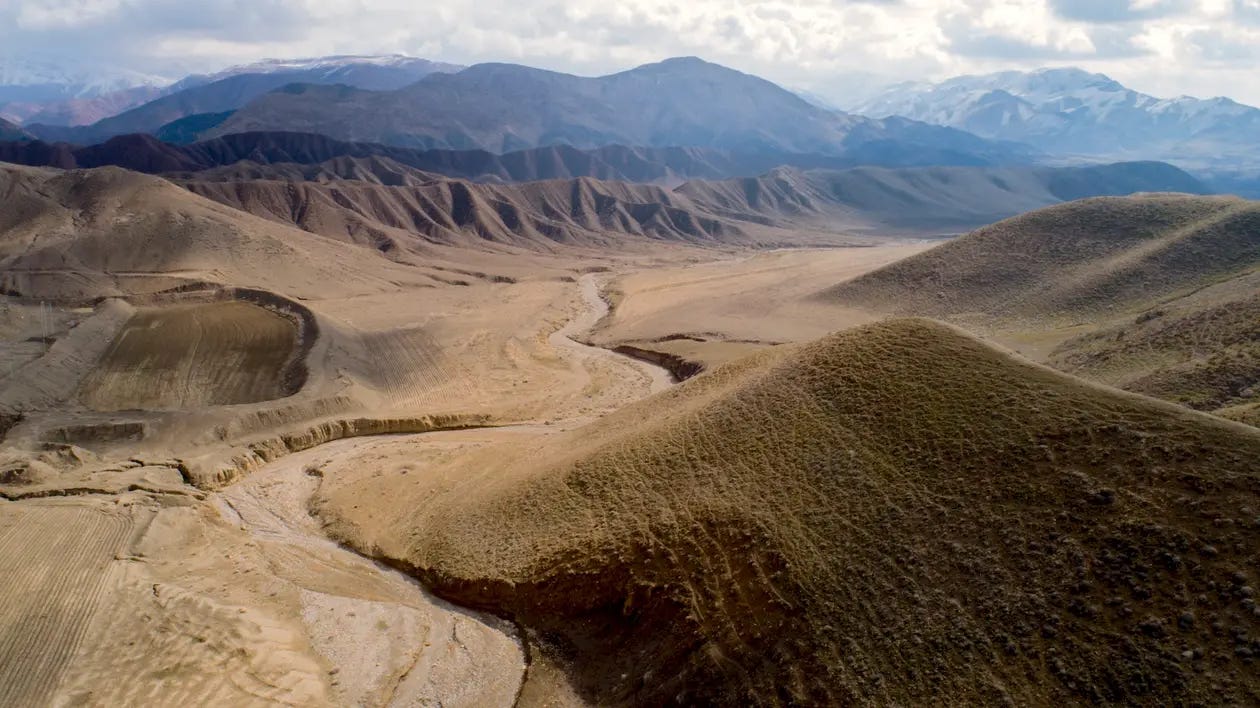
Future conflicts will not be solely ideological. They will be hydrological. A hydrologically unstable Iran means massive regional migrations, increased pressure on Iraq, Turkey, and the Gulf, tensions on shared basins like the Helmand and Harirud, and global food instability.
Already, Iran’s neighbors exacerbate the crisis. In Afghanistan, the Taliban are in a frenzy of dam building, reducing cross-border flows. The Pashdan Dam, commissioned in August, allows Afghanistan to control up to 80 percent of the Harirud’s flow, threatening the water supply of Mashhad, Iran’s second-largest city.
What Regime Change Cannot Fix
This is the heart of the demonstration. Overthrowing a government does not reverse aquifer subsidence, soil salinization, desertification, rising temperatures, or declining precipitation.
Without hydrological reform, any political transition will produce agricultural instability, food inflation, massive internal migration, and extreme urban vulnerability. The uncomfortable truth is that the world remains largely unprepared for conflicts motivated by environmental scarcity. Sustainable security depends less on the ideology in power than on a territory’s capacity to retain water. Without water, agriculture collapses, cities sink, tensions explode.
Part Four: Solutions for Iran
The solution exists. It is neither military nor ideological. It is systemic. The principle is simple: shift from a model of capturing and dominating water to a model of retention, infiltration, regeneration, and governance.
What can be done? Many hydrologists believe a massive funding shift is needed, away from dams and wells toward repairing qanats and recharging aquifers.
Transforming Iran into a Sponge Nation
The goal is to retain every drop of water where it falls, deploying a set of complementary solutions: permeable pavements to favor infiltration, parks and retention basins to capture rainwater, mandatory cisterns in new construction, rehabilitation of ancestral qanats, and design of roofs and pavements as collection surfaces. The potential is considerable. Several hundred million cubic meters could thus be recovered annually.
Agricultural Revolution
The heart of the problem is also the heart of the solution. Agriculture, the primary water consumer, must undergo a transition toward more sober practices: generalization of drip irrigation, crops adapted to aridity such as pistachio, saffron, and sorghum, agroforestry, mulching, and use of treated wastewater. Experts estimate that a 30 to 40 percent reduction in agricultural consumption is achievable within ten years.
The self-sufficiency goal must also be reconsidered. Researchers call for shifting to higher-value, less water-intensive crops sold internationally in exchange for basic foodstuffs. But this requires Iran to reintegrate the global commercial community.
The idea of recharging aquifers with floodwaters, long advocated by specialists, is paramount. Iran loses at least one-fifth of its precipitation to flash floods, and up to 80 percent of these floodwaters could be redirected to aquifers.
Restoring Landscapes
Beyond major technological projects, there exists a whole range of simple, low-cost, and fully sovereign technical solutions, depending on no imports. These methods, inspired by both ancestral know-how and contemporary agroecology, aim to retain water where it falls, restore soils, and revitalize ecosystems. Their major advantage is the speed of their effects. Visible results can be obtained in two to four years.
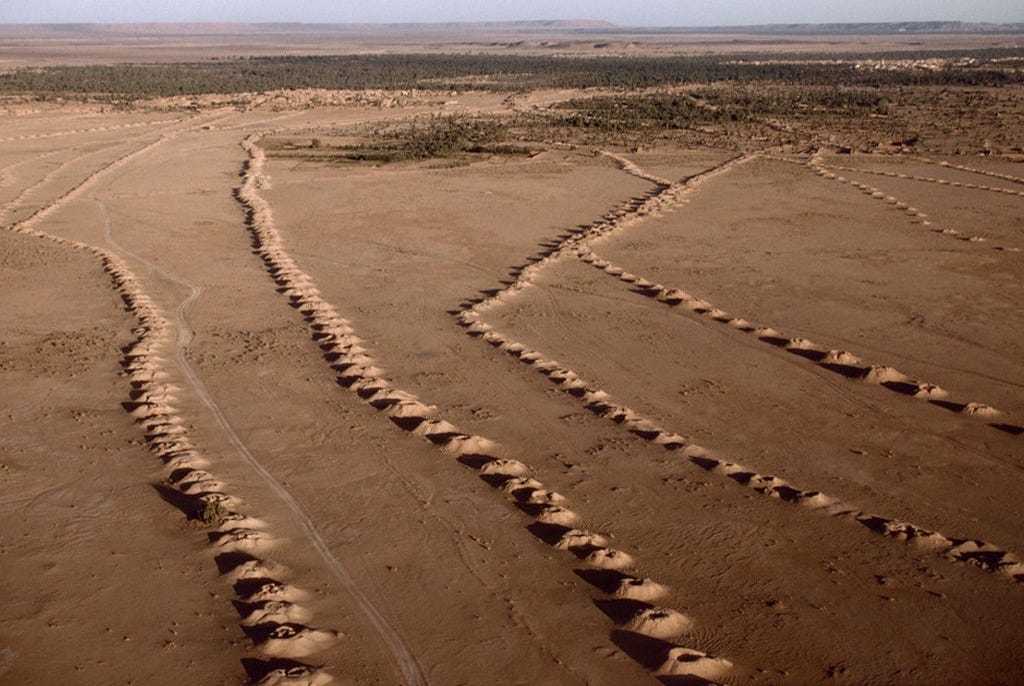
Half-moons are crescent-shaped excavations, generally two to four meters in diameter, dug along contour lines on sloping terrain. They capture runoff, concentrate moisture, and allow tree or fodder planting in the hollow of the basin. This technique, widely proven in the Sahel, has greened thousands of hectares. In Iran, it could be deployed on degraded foothills of the Alborz and Zagros ranges.
Stone lines are simple alignments of stones placed perpendicular to the slope. They slow runoff, favor water infiltration into the soil, and retain fertile sediments that would otherwise be lost. This technique, used for millennia in arid regions, progressively restores soil fertility and encourages natural vegetation regrowth.
Small earthen dams, just a few meters high, can be built in the beds of wadis and temporary watercourses. They retain floodwaters, recharge alluvial aquifers, and create moisture reserves for surrounding vegetation. Less costly than large concrete dams, they are also more easily reversible and better integrated into ecosystems.
Reforesting foothills addresses the fact that deforested foothills of Iranian mountain ranges accelerate runoff and erosion. Strategic reforestation, using local species adapted to aridity such as wild pistachio, almond, juniper, and holm oak, would stabilize soils, increase infiltration, and restore microclimates. These plantings can be combined with half-moons to optimize water capture.
Green belts around cities and villages of trees and shrubs play multiple roles: they fix soils, reduce wind erosion, create shade and humidity, and can provide wood, fruit, or fodder. In urban environments, they help cool the air and improve living conditions.
Fog harvesting in mountainous areas where fog is frequent but precipitation rare, such as parts of the Alborz, can be accomplished with collection nets. These simple vertical meshes, stretched perpendicular to prevailing winds, capture tiny water droplets contained in the mist. Water then runs down to a gutter and is stored in reservoirs. Installations in Morocco, Chile, and Peru collect several thousand liters daily, supplying entire villages.
These solutions are strategic for Iran because they ensure sovereignty, depending on no imports, foreign technologies, or spare parts potentially blocked by sanctions. They are low-cost, their deployment mainly mobilizing local labor and locally available materials. They are fast, unlike large projects taking years, these techniques produce visible effects in two to four years. They create employment, mobilizing thousands of people in labor-intensive projects and creating rural jobs. They build resilience, continuing to function without inputs or complex maintenance once implemented. And they restore biodiversity, revitalizing ecosystems and encouraging the return of fauna and flora.
These approaches, too long neglected in favor of large dams and water transfers, deserve to be placed at the heart of national water strategy.
Massive Reuse of Treated Wastewater
The untapped potential of wastewater is considerable. Between 1.2 and 2 billion cubic meters could be recovered annually. Several technical solutions can achieve this goal.
Artificial wetlands reproduce natural purification processes. Phytoremediation uses plants to filter and clean water. Controlled groundwater recharge after appropriate treatment replenishes aquifers. Separate sewer systems distinguishing rainwater from wastewater from the urban design stage facilitate treatment and reuse.
The major advantage of these technologies is their resilience to international sanctions. They are mostly simple, low-cost solutions, often based on natural processes, not dependent on complex imports or hard-to-obtain spare parts. They can be implemented with local skills and locally available materials.
Strategic Conclusion
The preceding analysis leads to a central finding: Iran’s security and stability do not depend primarily on its political regime or external pressures, but on its capacity to meet the water challenge it faces. Whatever leaders are in Tehran, whatever regional geopolitical evolutions occur, one reality imposes itself: without water, there is no agriculture, no industry, no lasting social stability.
Lessons from the Iranian Crisis
The Iranian situation reveals several truths that go beyond its single case.
First, environmental crises do not erase before political considerations. A change of government, a revolution, or an external intervention does not restore exhausted groundwater tables, does not repair salinized soils, does not bring back rain. Hydrological cycles have their own temporality, ignoring electoral calendars and political alternations.
Second, water management is an indicator of governance quality. Opacity, concentration of decisions, preference for megaprojects over field solutions, marginalization of independent experts: these dysfunctions, observed in Iran, are not unique to it. They are found in many countries facing similar challenges.
Third, solutions exist. Iran has considerable assets: a millennial hydraulic heritage of qanats, traditional irrigation systems, and cisterns, recognized scientific skills, a population aware of the stakes. The silent hydrological revolution is possible: retain water where it falls, infiltrate aquifers, restore degraded landscapes, modernize agriculture, reform governance.
The Regional Contrast
The comparative study with the water policy pursued by the occupying power reveals opposite trajectories. On one side, efficient technological management, fruit of constant investment and rigorous planning, but backed by control of transboundary resources and documented access disparities. On the other, past abundance squandered, questionable choices, and today strategic shortage in a context of international sanctions.
This contrast illustrates a broader truth: water has become a major geostrategic stake. Countries that manage it sustainably will strengthen their resilience and influence. Those that neglect it will expose themselves to internal tensions and external vulnerabilities.
A Warning and a Call
Recent regional history shows that environmental crises can be accelerators of destabilization. Massive rural migrations, resource tensions, conflicts of use fuel social and political dynamics difficult to control.
A military strike can change a flag. It does not fill a groundwater table.
Lasting security will not come from bombardment or revolution, but from a silent revolution: retain, infiltrate, regenerate, govern water wisely. Without this, whatever regime is in place, the cycle of instability risks continuing.
A Lesson for Arid Lands Worldwide
This observation, beyond the Iranian case, challenges all countries of the southern Mediterranean and Saharan regions. It speaks to every nation facing water stress, from Morocco to Jordan, from Tunisia to the Gulf states.
The preservation of ancestral hydraulic heritage, the generalization of efficient irrigation techniques, rainwater harvesting, the multiplication of soil anti-erosion measures, the development of wastewater recycling, the fight against waste in urban networks are not mere sectoral policies. They are the pillars of lasting national sovereignty, facing the climatic and geopolitical challenges of the century.
Water, through its growing scarcity, is redrawing the map of vulnerabilities and powers. Countries that make it a factor of internal cohesion and regional cooperation will be better armed for the coming decades. Others will expose themselves to tensions whose consequences we are only beginning to measure.

Could it be that 'western powers' have manipulated the precipitation that Iran gets?
https://www.i24news.tv/en/news/middle-east/artc-iranian-expert-accuses-us-israel-of-weather-manipulation-to-deepen-drought
https://geoengineeringwatch.org/442015-geoengineering-watch-radio/