


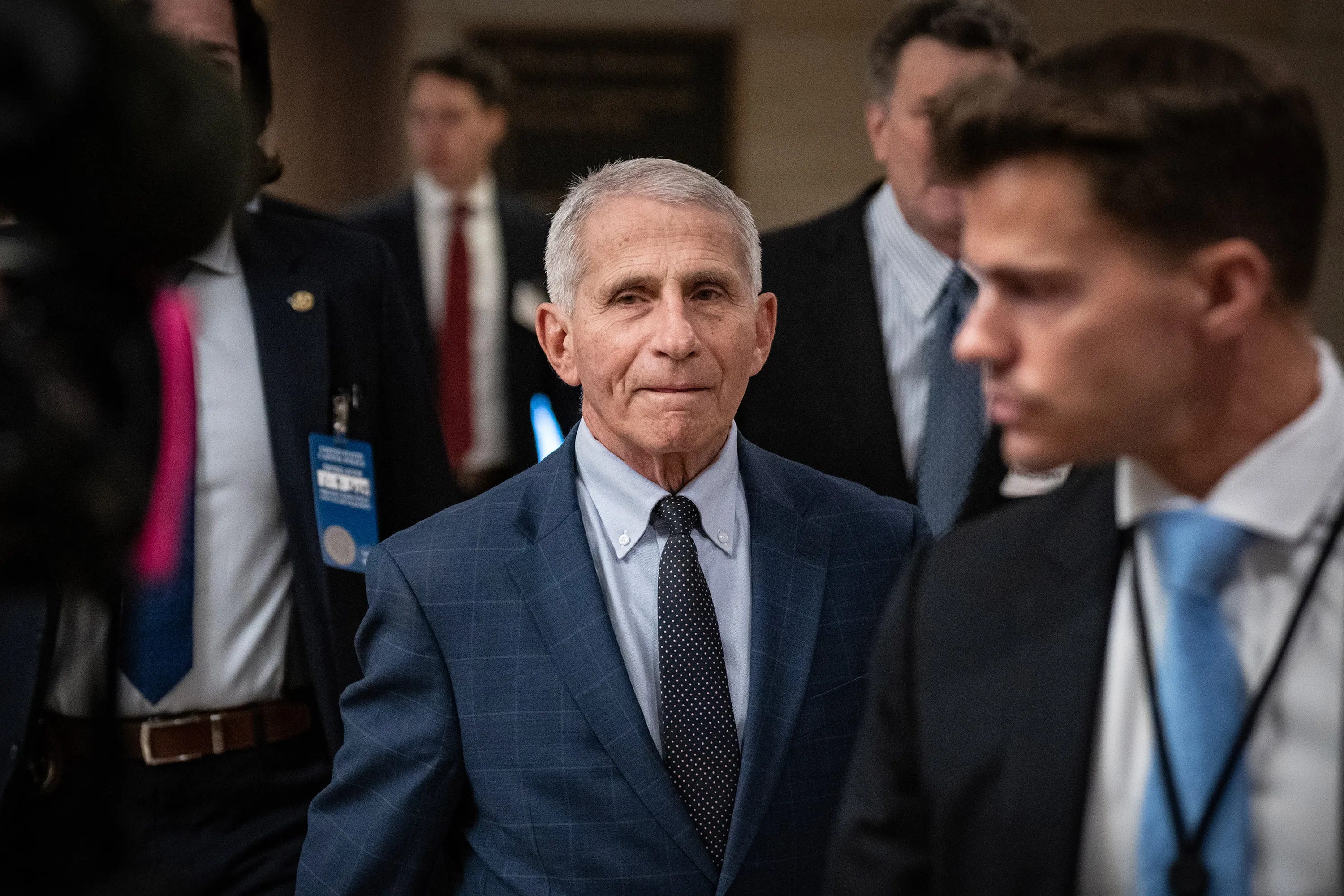
There are moments in history when the scandal is larger than the individuals involved. The latest claims made by former US Director of National Intelligence Tulsi Gabbard belong in that category. Her allegations—that Anthony Fauci influenced intelligence assessments, that dissenting analysts faced retaliation, and that politically convenient narratives overwhelmed competing explanations—are explosive.
Yet the greater danger lies elsewhere. Whether these claims are ultimately vindicated, partially substantiated, or disproven, the episode illuminates something profoundly unsettling: the institutions entrusted with discovering truth may themselves be vulnerable to struggles over power.
That possibility should alarm far beyond Washington. The Covid-19 pandemic killed more than seven million people officially and caused an estimated US$13—17 trillion in economic losses, according to IMF and World Bank estimates. Entire societies surrendered extraordinary powers to governments, health agencies, and expert communities because trust was considered the indispensable currency of crisis management. But trust, once fractured, rarely returns intact.
The issue is no longer merely the origins of SARS-CoV-2. It is whether the architecture of global health governance rests upon foundations solid enough to withstand political storms.
Gabbard’s allegations, released alongside declassified materials and whistleblower claims, describe a system in which scientific authority allegedly intersected with intelligence institutions in ways that discouraged dissent and rewarded conformity. Such assertions remain contested, and any definitive conclusions require independent scrutiny. Yet the implications transcend personalities.
A disturbing structural question emerges. What happens when scientific expertise, intelligence analysis, and political imperatives converge so tightly that they become indistinguishable?
The Covid era already demonstrated how fragile consensus can be. WHO member states struggled to cooperate. Vaccine nationalism eclipsed solidarity. Competing narratives over the virus’s origins hardened into geopolitical weapons. German Institute for International and Security Affairs analyses and DGAP reports have documented how the pandemic triggered a “blame game” that fractured trust among states and weakened collective responses.
Meanwhile, confidence in institutions has deteriorated sharply. OECD surveys show only 39 per cent of people across thirty countries express high or moderate trust in their governments. The United Nations warns that declining faith in institutions threatens social cohesion itself. Public health leaders increasingly speak of an “infodemic,” where societies no longer share common facts.
That loss of shared reality carries strategic consequences.
Modern global health governance is built upon assumptions of transparency and early disclosure. The World Health Organisation possesses no intelligence arm. It depends upon member states for data and access. National agencies depend upon scientific expertise. Intelligence communities increasingly fuse biological threats with national security analysis. Pharmaceutical industries influence on research ecosystems is worth hundreds of billions of dollars annually.
In theory, these interconnected systems produce resilience. In practice, they may create epistemic chokepoints.
The pandemic exposed a dangerous concentration of narrative power. If powerful actors shape the flow of information at the national level, those distortions cascade through the international system. The WHO cannot independently compel sovereign powers to surrender classified material. Nor can global institutions fully audit conflicts of interest embedded inside national scientific bureaucracies.
A world organised around voluntary transparency becomes vulnerable when transparency itself becomes political. International relations theory offers a sobering lens. Realists have long argued that trust is scarce in an anarchic system. Liberal institutionalists counter that rules and institutions can create cooperation. COVID tested both propositions simultaneously.
The result was uncomfortable. Great powers behaved as realists. Institutions were expected to act as liberals.
Neither succeeded. The pandemic exposed a harsher reality: strategic rivalry no longer stops at borders or battlefields. It now penetrates laboratories, intelligence systems, digital networks, and even the production of scientific truth itself. Biological research, artificial intelligence, and cyber capabilities have become geopolitical weapons, where information is prized as much as territory. Scientific narratives are no longer simply products of evidence and inquiry; they have become instruments of power, shaped, amplified, and contested by states seeking strategic advantage.
In this new age, the struggle is not merely over who commands armies or economies, but over who gets to define reality itself. And when truth becomes another battlefield, humanity enters a dangerous era where facts are treated not as common goods, but as strategic assets to be captured, manipulated, and deployed. The most troubling possibility is not that one side lied. It is what everybody now assumes somebody did. That assumption corrodes the social contract underpinning global crisis management.
Future pandemics may arrive in a world where citizens instinctively suspect cover-ups, governments distrust each other’s data, scientists fear reputational annihilation, and intelligence agencies are viewed as political actors rather than neutral assessors. In such an environment, pathogens gain a strategic advantage. Delays become deadlier. Warnings become contested. Cooperation becomes impossible. Truth becomes the first casualty long before the first patient appears.
History offers uncomfortable parallels. The Iraq War damaged trust in intelligence. Financial crises undermined trust in economic expertise. COVID has now shaken confidence in scientific authority itself. Civilisations can survive disease. They struggle to survive the collapse of legitimacy. Repair requires more than partisan investigations. It requires structural redesign.
Independent pandemic-origin mechanisms insulated from great-power influence. Stronger protections for whistleblowers. Competing analytical centres rather than monopolies of expertise. Greater transparency around research funding and conflicts of interest. New international arrangements capable of separating scientific advice from political necessity.
Most importantly, institutions must rediscover something that technology, classification and expertise alone cannot manufacture. Humility. Because the greatest lesson of COVID may not concern bats, laboratories, or intelligence files. It concerns human fallibility.
A world confronting climate shocks, synthetic biology and emerging pathogens cannot afford institutions that demand trust while fearing scrutiny. Global governance ultimately rests not on power but on legitimacy. And legitimacy depends upon something fragile and irreplaceable.
Confidence that truth matters more than narratives. If that confidence disappears, the next pandemic will not merely test hospitals and vaccines. It will test whether humanity still possesses institutions capable of telling itself the truth.

“…The Covid-19 pandemic killed more than seven million people…” how many were killed by experimental pharma products, extreme procedures, insane mandates, economic, mental & health hardships?
And who profited? And how much?